
ABOUT US
Xiangying is a professional manufacturer of veneer dryers and plywood equipment.
Our 18,000 m² site includes 15,000 m² of buildings, supporting product development, manufacturing and service for customers in China and overseas.
GET A FREE QUOTE
Error: Contact form not found.
-
Home

-
Blog
-
News Updates
- How to Prevent Jams in a Roller Veneer Dryer
How to Prevent Jams in a Roller Veneer Dryer
-
 admin
- 27,November
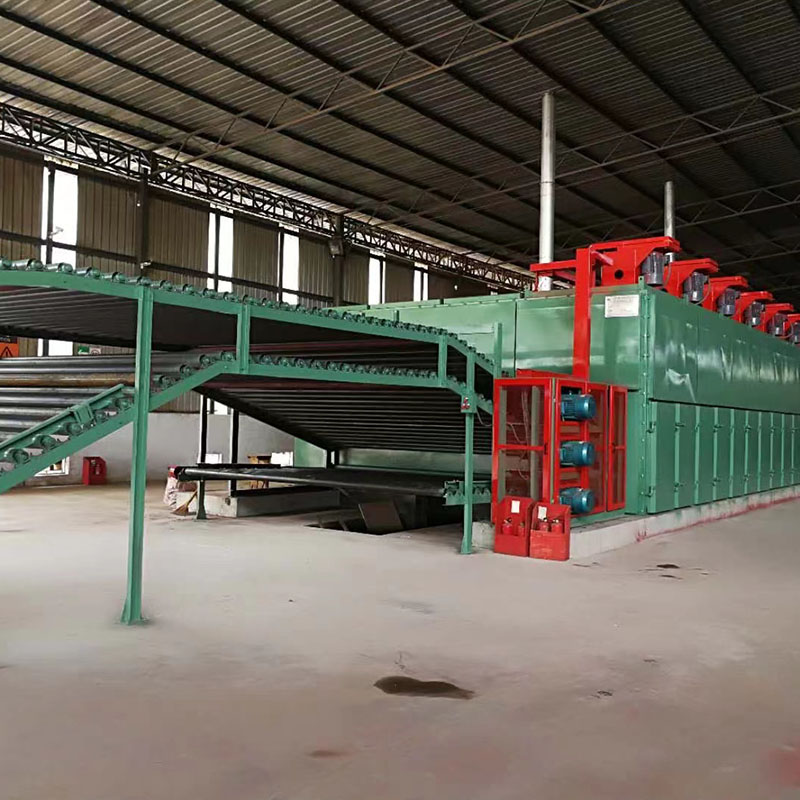
A jam in a roller veneer dryer often becomes visible where sheets pile up, but the obstruction may have started farther upstream. A second sheet may have overlapped the first at the infeed, or a narrow piece may have entered the roller path in an unsuitable orientation. Before changing speed or replacing parts, identify where the first sheet stopped moving normally. That location tells you whether to investigate the veneer, the feeding method or the conveyor.
Find Where the Veneer First Stops Moving
Record the deck, time, sheet size and approximate location whenever a blockage occurs. Also note when the line was last running normally and what changed just before the stop. A few entries tied to material formats and feed positions are more useful than a general record that says the dryer jammed.
Distinguish Infeed Problems From Internal Jams
At the infeed, look for visible overlap, skew or inconsistent spacing from the designated operator position. If sheets repeatedly arrive skewed before reaching the dryer, review the transfer from the feeder and how the sheets are presented. If they enter squarely and stop repeatedly in the same internal section, the maintenance team has a location to inspect after isolation. A pile of sheets found downstream may contain evidence of the jam, but it does not necessarily identify where the first sheet caught.
Check Whether the Problem Follows One Deck or One Format
A jam that started after a format change suggests checking the dimensions and condition of the newly introduced stock. A jam that stays on one deck across several suitable formats calls for closer attention to that deck's transfer points and rollers. These patterns guide the next step. Physical inspection and a controlled restart are still needed to verify the cause.
Check Sheet Size and Orientation Before Feeding
Once there is a record of the affected format, compare it with the model's approved feeding envelope. A sheet can fit within the overall machine width and still be too small, too irregular or poorly supported for the roller arrangement.
Confirm Minimum Sheet Width for the Dryer Model
Xiangying describes the BG1333 Three-Deck Roller Veneer Dryer as a cut-before-dry machine mainly used for core veneer. Its published product description calls for veneer wider than 350 mm to avoid piling up. Confirm which sheet dimension the manufacturer means for the intended feed direction, and check the approved limits for the machine installed at your plant. The figure applies to the cited model guidance and should not be used as a general limit for other machines.
Irregular pieces need special attention. The overall measurement of a torn sheet can hide a narrow or broken leading edge. Keep damaged pieces, clipped offcuts and undersized sheets out of the normal stream unless your line has an approved way to handle them. This is particularly useful after a clipping setup change, when a short run can introduce several sizes into the same stack.
Align the Leading Edge and Separate Successive Sheets
Check the leading edge at the transfer into the dryer. An angled sheet can reach a transfer point on one side before the other, and an overlap can carry two layers where the feeder was set up for one. Review sheet spacing, alignment and the feeder settings for the actual material. If overlap starts at pickup, correcting the pickup condition will tell you more than changing dryer speed.
Inspect the Conveyor Where Jams Repeat
When correctly sized sheets continue to stop at the same location, prioritize that section of the conveyor. Restricted movement, damaged parts and accumulated scraps are possibilities for the maintenance team to verify. The roller veneer dryer range includes several deck configurations, so use the documentation for the installed machine when identifying the affected transfer and its service points.
Internal checks and jam clearance belong to trained personnel following the plant's approved shutdown, isolation and cooling procedures. Compare accessible transfer points, rollers and drive components with the manufacturer's maintenance instructions. Look for marks or debris that match the location where sheets first catch. Record the finding and any corrective work, especially when the fault appears only on one deck.
Verify the Fix Under Normal Feeding Conditions
After maintenance releases the machine for restart, run a known-good veneer format first. Observe the infeed and discharge from designated positions. If the known-good format feeds consistently, run the previously affected format only after confirming that it meets the approved limits. Use the same feed orientation and identify the deck so that the two runs can be compared.
As a hypothetical example, a line jams shortly after switching from full core sheets to narrower strips. If full sheets pass and the strips are below the published size limit for the installed model, stop using those strips on that feed path and review handling options with the supplier. If both compliant formats catch at the same transfer point, return to the mechanical inspection for that location. Either result is more informative than declaring the fault solved after a single sheet passes.
Roller Dryer Troubleshooting Support From Xiangying
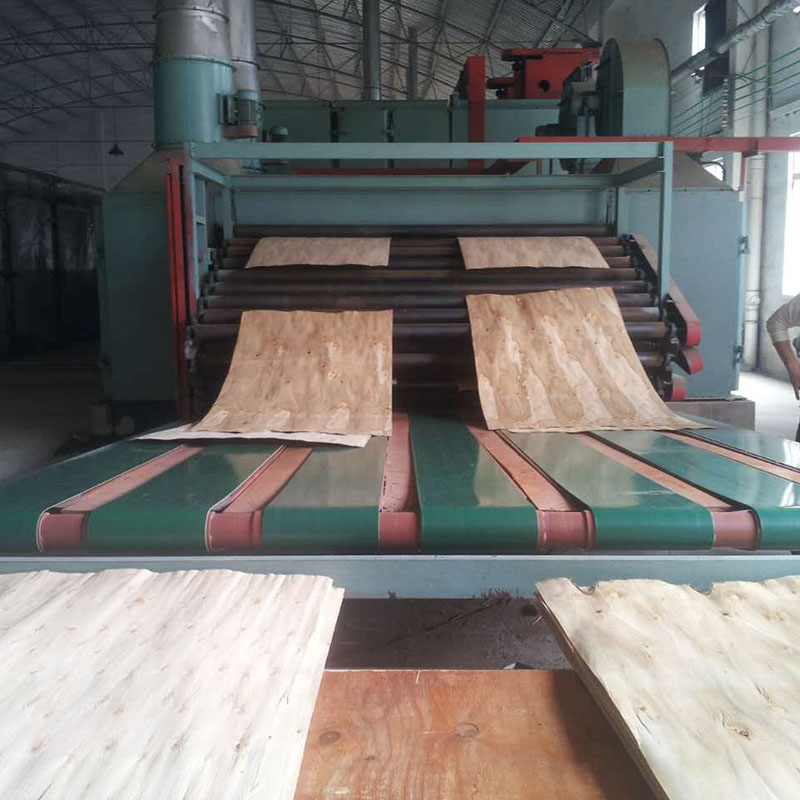
Xiangying manufactures roller, mesh belt and combined veneer dryers. If jams persist, its equipment troubleshooting service can help identify the next inspection steps. Start with the machine model, the affected deck and the sheet dimensions in the direction used. A short video taken from a safe observation point, or a record of what changed before the jam, can help the team narrow the cause.
Conclusion
Prevent repeat jams by identifying the first point where sheet travel fails, checking the veneer and feed conditions, and inspecting the corresponding conveyor section if the fault persists. Verify the correction with a known-good run and then with representative production stock that meets the machine's limits.
FAQs
Can a Dryer Handle Random-Width Veneer?
It depends on the feeder and roller configuration. Ask the supplier to confirm the approved dimensions and feeding method for the actual spread of widths before mixing those pieces into production.
Should Veneer From a Cleared Jam Return to the Line?
Set it aside for inspection. Check for broken edges, distortion and moisture variation, then follow the mill's rules for reprocessing or rejection.
What Should Operators Note After an Intermittent Jam?
Record the material batch, sheet dimensions, deck, feed direction, time and observed stopping point. Include any recent format or feeder changes so maintenance can compare incidents across shifts.


Related Products
Best-selling Products
BG1933B Three-Deck Mesh-Roller Combined Veneer Dryer
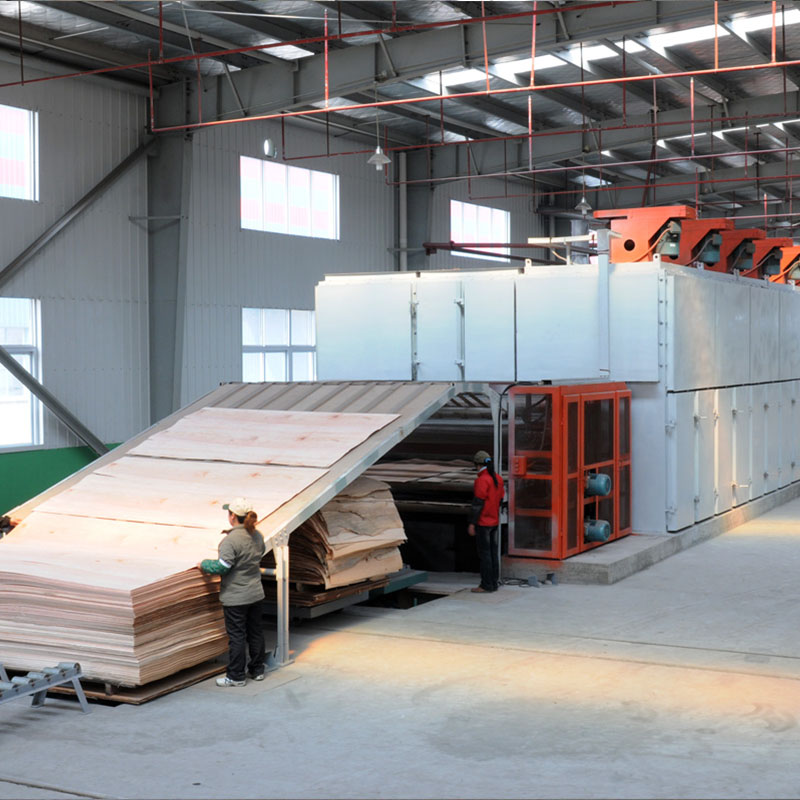
Our product is a kind of straight-conveying transverse- circulating net-roller dryer, provided with both net and roller structures. net-roller veneer dryer has two kinds' layers of net and roller; it can be in process to dry for face plate and thick core plate at the same time. It has the advantages of less ground space and multi-use of one machine.
Our product is a kind of straight-conveying transverse- circulating net-roller dryer, combining advantages of European dryers. It uses the side equipped centrifugal fans( air flow 62 thousands m3/h). New heat exchanger and rectangle variable cross-section spray boxes make the veneer surface uniformity for heating air. Heating sections fans of front and back areas are equipped by left and right, so they make the veneers the same final humidity after dried. In addition, for the damp climate condition, the dyer adds the cooling open sections length, it is advantages for veneers cooling that it avoids getting damp.
The dryer's heating system use steam or oil boiler. When it uses the oil boiler, it needs to know the system safety, heating system tubes and heating exchangers should avoid carbon deposit and fire accident. Don't let water, acidity and low boiling point material into system.
BG1932 Two-Deck Mesh-Roller Combined Veneer Dryer
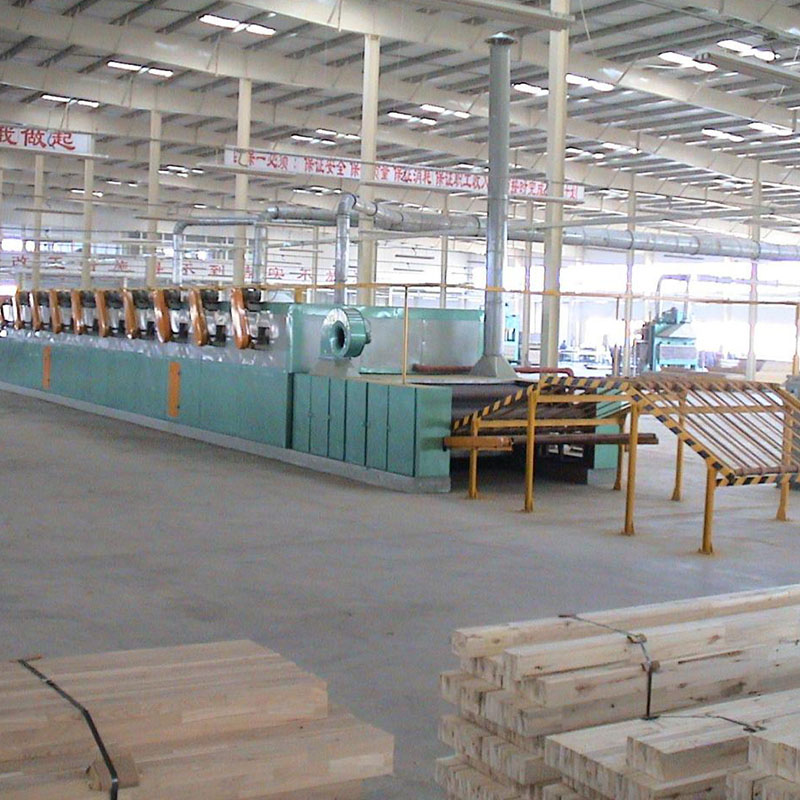
BG1932 2-layers net-roller veneer dryer has two kinds' layers of net and roller; it can be in process to dry for face plate and thick core plate at the same time. It has the advantages of less ground space and multi-use of one machine.
The BG1932 net-roller dryer machine is designed by unit structure principle, the standard type is 10 sections. 2 meter as a standard for one dryer area, one section cooling room, one drive system, input roller table and output roller table. Customer can choose the sections of dryer machine according to your needs. (5 sections to 15 sections)
BG1334 Four-Deck Roller Veneer Dryer
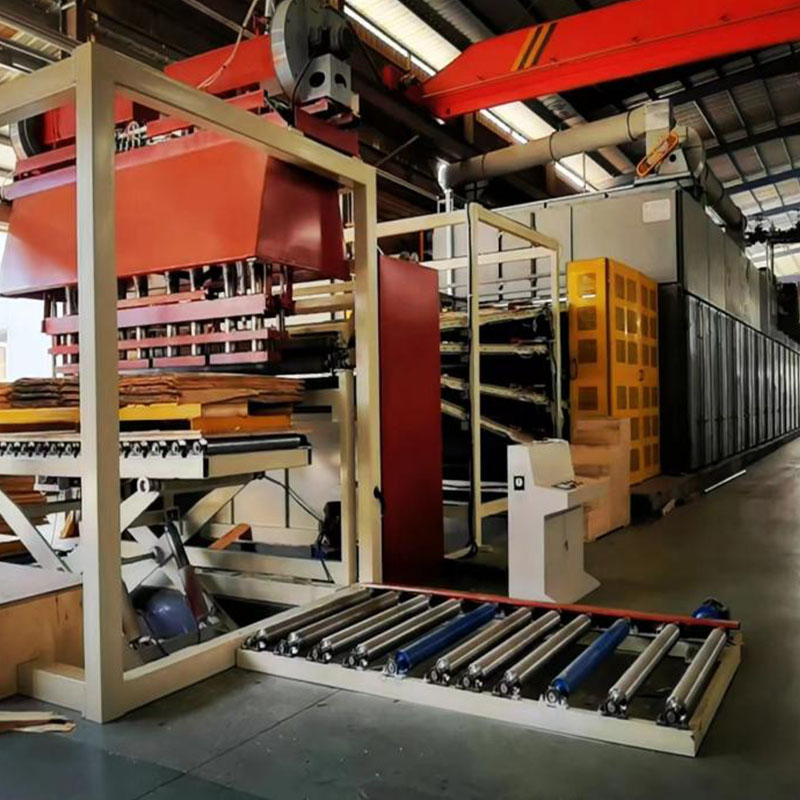
BG1334 4-deck jetting roller veneer dryer consists conveying system, heating section, steam system, cooling section, exhausting system and input & output roller system. Heating section consists of two parts, front and back part, with heating fans set on both side to ensure consistent final moisture at each point.
In heating process, air is compressed into heaters by erect centrifugal fans for heating, and then compressed into jetting bellows. Afterwards, hot air is jetted onto veneers conveyed between rollers for drying. Hot damp air then again is drawed into centrifugal fans for a circular use. Part of hot damp air is exhausted through exhausting system in exchange of some fresh air to keep a proper air moisture. It adapt to the technologic conditions: first, cut; second, dry. It is mainly with drying core board of veneers. The stringy orientation of dry veneer is the same as inputting veneer, and the width should be more than 350mm, or it will be happened phenomenon of walling up veneers.
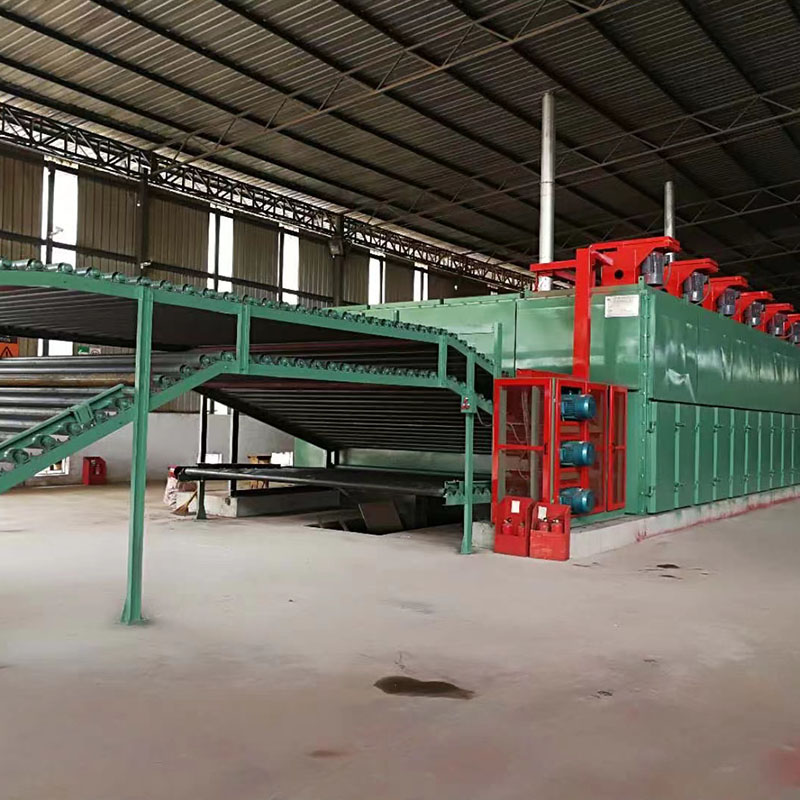
BG1333 Three-Deck Roller Veneer Dryer
BG1333 3-deck jetting roller veneer dryer consists conveying system, heating section, steam system, cooling section, exhausting system and input & output roller system. Heating section consists of two parts, front and back part, with heating fans set on both side to ensure consistent final moisture at each point.
In heating process, air is compressed into heaters by erect centrifugal fans for heating, and then compressed into jetting bellows. Afterwards, hot air is jetted onto veneers conveyed between rollers for drying. Hot damp air then again is drawed into centrifugal fans for a circular use. Part of hot damp air is exhausted through exhausting system in exchange of some fresh air to keep a proper air moisture.
It adapt to the technologic conditions: first, cut; second, dry. It is mainly with drying core board of veneers. The stringy orientation of dry veneer is the same as inputting veneer, and the width should be more than 350mm, or it will be happened phenomenon of walling up veneers.
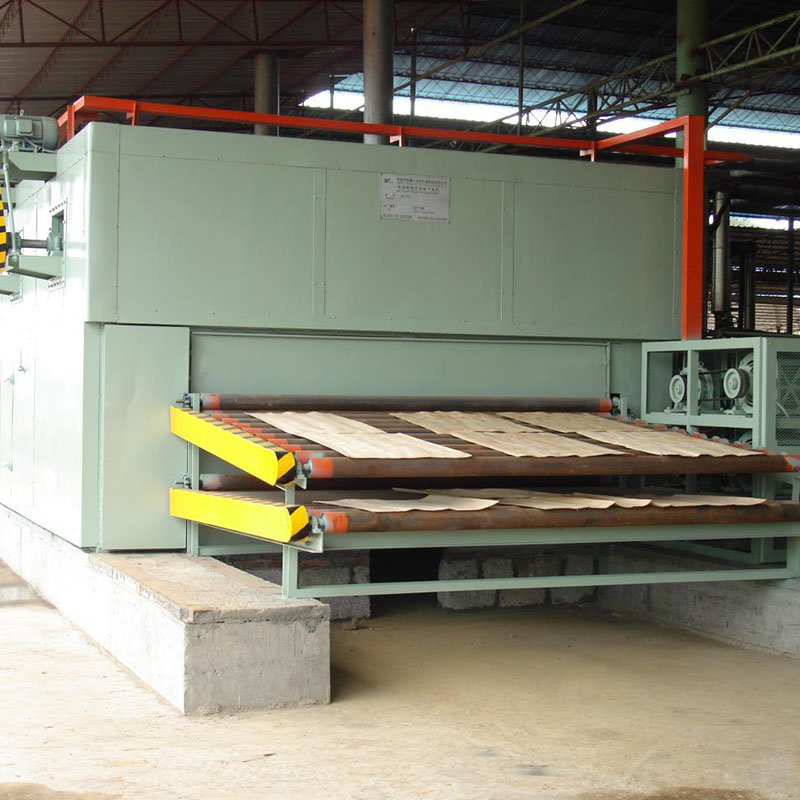
BG1332 Two-Deck Roller Veneer Dryer
BG1332 2-deck jetting roller veneer dryer is a main equipment of producing veneer. It adapt to the technologic conditions: first, cut second, dry. It is mainly with drying core board of veneers. The stringy orientation of dry veneer is the same as inputting veneer, and the width should be more than 350mm, or it will be happened phenomenon of walling up veneers. There is a ventilator in every unit dry area; it adopts straight-conveying transverse - circulating jetting way, and it lets heat put into and make humidity (wet) vent, quicken the dry pace much. Also, it makes the veneer dry be well-proportioned, reduce warp of the hydrous rate. The product has some advantages: maintain convenience, trusty safe and so on. So this is a perfect product for drying thick veneers in producing veneers process.
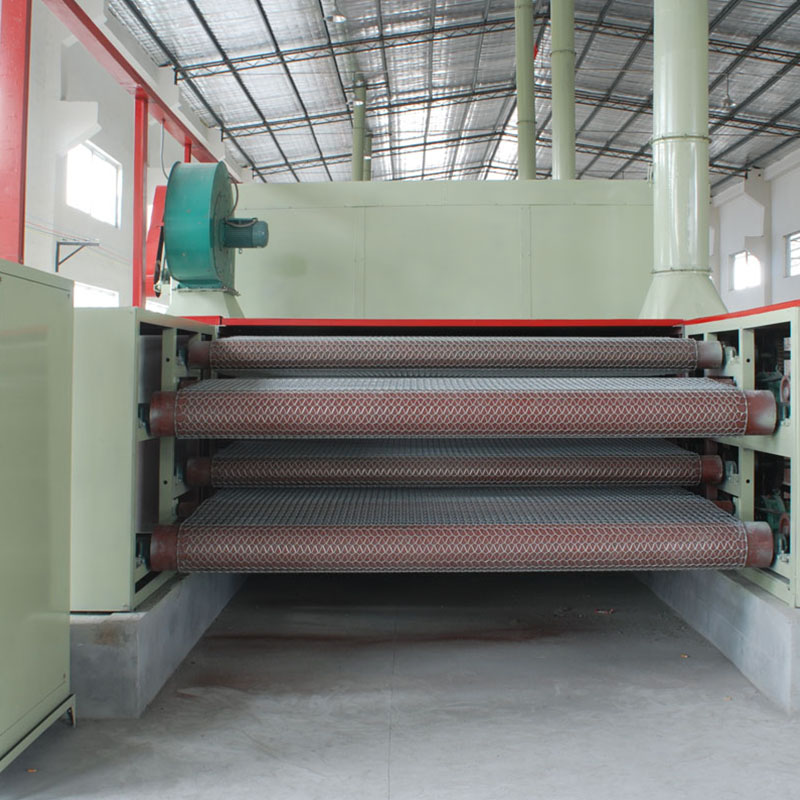
BG183 Two-Deck Mesh Belt Veneer Dryer
Our product is a kind of transverse-circulating vertical-jetting belt dryer, a kind of continuous drying equipment. Our product can be applied for the drying process of top and bottom veneer, which can be used to produce architectural moulding board, joinery board, floor board, container bottom board, and so on. eatured with less acreage and more usage, applied with the advantages of the advanced veneer dryers in and abroad, and designed for the purpose of economy, trustiness and high grade, our product guarantees a promotion of yield, an improvement of products, a cut of energy consuming and production cost, as well as satisfactory increasing benefit.
The standard type includes 13 heating sections, one cooling section (leftward) , and we can add or remove proper heating sections and adjust the heading type in order to meet your demands of production, concerning yield, arrangement and location. We'll do our best to help you obtain the most producing capability with the least investment.