
 EN
EN
 AR
AR
 FR
FR
 DE
DE
 HI
HI
 RU
RU
 ES
ES
 TL
TL
 ID
ID
 UK
UK
 VI
VI
 TH
TH
 TR
TR
 MS
MS
 KA
KA
 BN
BN
 LO
LO
 MY
MY
 KK
KK
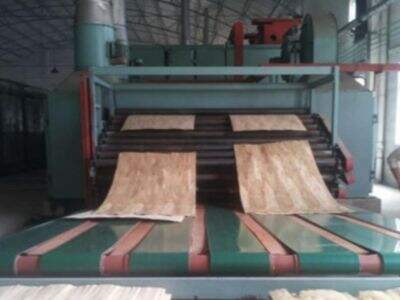
Getting the glue evenly spread around a surface veneer in particular is critical in woodworking. Veneer lamination is to stick thin pieces of wood together into something thick, strong, and beautiful. This is a job that requires precision, and there's no better place for accuracy than the glue spreader.
Introduction
The glue spreader plays a big role in making laminated wood. Unless you applied glue evenly to the wood, there will be places on the wood that will stick well though this is not always true and places where it wouldn't stick at all. Imagine trying to hold two slices of bread together with jelly. If you only jelly one side, it doesn’t stick. The same goes for veneer. Precise spreading of glue ensures each layer gets just the right amount. And that will create a solid bind, which is what we need keeping it all together over time. If the glue is too thick, it can escape and make a mess. Too thin and the layers could easily separate.
Features and benefits for improved lamination quality
To ensure the glue spreader works well, we focus strictly on some of the following characteristics detail: The first is to make sure you can configure them. This provides workers the option of altering how much glue is spread depending on the wood itself and/or the project. There’s a lot of variation in how different woods will take stock like this, so I like that there are 2-3 keys here. And other is how you made the glue spreader. A good design would facilitate to apply glue smoothly and evenly.
Use of Spreading Machines for Veneer Production
Veneer is frequently used for furniture and other wooden products in order to provide a nice finish. Glue spreaders are very important for applying the veneer dryer for sale to the wood. But there can be some potential issues in their use. Uneven gule application is a very typical problem. When glue application isn’t uniform, one section of veneer may adhere better than another. This can result in bubbles or empty spaces, and the final product may look unattractive. If the glue is too thick in places, it may squish out when the veneer is applied. This not only is a mess but can also deteriorate the bond. Another problem is to use the incorrect type of glue.
Shopping for Glue Spreader Technology
If you are in the market for a glue spreader to add to your cabinets, then there are specific features that will enhance your experience of veneer production. The glue spreader should include adjustable settings. This enables the user to regulate how much adhesive is being spread onto the veneer. Various types of veneer dryer machine also require varying amounts of glue, so the ability to adjust is crucial. Secondly, the pasting machine is required to keep clean. If the glue spreader is difficult to clean, then there might be a problem with glue buildup affecting performance. A quality glue spreader will have components that can be disassembled for cleaning.
Using Precision Glue Spreaders to Increase Performance
For perfect results in veneer lamination, you will need a precision glue spreader. The glue spreader setup is the first thing you should examine. This costs looking at the settings, and making sure the settings are right for that plywood veneer dryer you’re using. It is preferable to test it before starting the production. This is to help determine if the adhesive is applied evenly and how much of it is being used. In case of problems during the test, they can be adjusted before producing in real. Second, the workers should check glue spreader for equipment constantly during its application. If they see any change in how the glue is being applied, they should stop to examine whether there are any clogs or other problems.