
 EN
EN
 AR
AR
 FR
FR
 DE
DE
 HI
HI
 RU
RU
 ES
ES
 TL
TL
 ID
ID
 UK
UK
 VI
VI
 TH
TH
 TR
TR
 MS
MS
 KA
KA
 BN
BN
 LO
LO
 MY
MY
 KK
KK
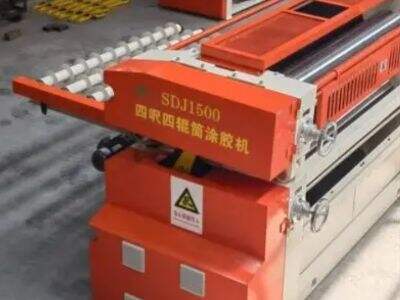
Drying thin veneer is an essential element of producing quality wood products. It serves to remove the wetness from the wood, thereby avoiding warped or cracked product. One method that significantly helps in this is the mesh dryer method. This method uses a specialized mesh to support the veneer as it dries. Using it will produce faster, higher quality drying, which is extremely important for firms such as XIANGYING, who want to produce quality wood product without sacrificing time or energy.
Mesh Dryer Method is Essential for High-Speed Thin Veneer Drying Lines
Mesh dryer method is of utmost importance to veneer drying process. It enables heated air to flow around the wood, allowing it to dry more quickly. Once veneer is evenly and rapidly dried, the tendency for it to bend or crack is reduced. In a drying line, veneer moves across the surface of a mesh belt within the dryer. The belt keeps the wood flat and allows heated air to reach both surfaces. If air is permitted to flow around the veneer unimpeded, the wood will dry at its best quality.
Further, mesh dryers are capable of drying different types and sizes of veneer; therefore they offer a large degree of flexibility. For XIANGYING, this allows them to process different types of wood without needing to alter the drying line entirely. Firms can adapt more easily to market changes using such a device. In addition, it often yields energy savings compared to older forms of drying: as hot air is more effectively allowed to circulate, it consumes less energy to dry at comparable rates.
What Are the Advantages of the Mesh Dryer Method for Veneer Drying?
The mesh dryer method offers numerous advantages for veneer drying. Firstly, the quality of the dried veneer is increased. As heated air is allowed to flow evenly over the wood, the entire sheet is equally dry, thus significantly less veneer will be cracked or warped and the end result quality will be improved. When firms such as XIANGYING offer superior quality veneer products they are more likely to gain an advantage in the market, with more and more customers choosing their products over others.
Another benefit of using mesh dryers is the increase in speed of the process. In older methods, it is necessary to dry the wood slowly in order to keep it flat, thereby extending the drying time considerably. With mesh dryers, faster drying rates are possible, allowing the firm to produce greater volumes of veneer in a shorter period of time. This benefit alone can provide a competitive advantage.
In addition, the mesh dryers themselves are relatively easy to operate and maintain. It includes simple controls for temperature and air flow rate depending on the type of veneer. This allows the user to ensure that the veneer is dried at its optimum conditions and increases overall productivity. It reduces the chance of mistakes and thus increases the yield of acceptable product, meaning that customers receiving products are more likely to be satisfied.
To summarize, the mesh dryer method is essential to the high speed drying of thin veneer, allowing it to be produced at high quality and with less waste of energy, in addition to offering time benefits to companies such as XIANGYING which enable them to stay competitive.
Mesh Dryer Method Solves Drying Problems
Drying thin veneer present many challenges to a firm. Thin veneer is delicate, and is prone to breakage if not processed at the optimum rate and temperature. Older forms of drying often result in uneven dryness of the product, thus creating warp and cracks in the material. This is where the mesh dryer method proves so useful. Mesh dryers, such as those produced by XIANGYING, feature an inventive design which allows heated air to circulate freely around veneer sheets. The rate of drying for the wood is thereby greatly increased, as the warm air readily and equally penetrates all portions of the veneer.
The inefficiency of earlier dryers was that they were prone to hot spots and cold spots. These hot and cold spots produce temperature gradients within the wood itself, causing bending and cracking. Mesh dryers counteract this issue by allowing heat to be gently introduced from all sides of the veneer at the same rate and level. Therefore, there are minimal temperature gradients between adjacent points within the wood, resulting in optimum veneer drying. The slow rate of drying using traditional methods also decreases overall productivity and is not time efficient.
Mesh dryers are also highly user-friendly and relatively low maintenance. They come with user-friendly controls which allow users to optimize drying temperature and airflow based upon the particular type of veneer being processed. This further simplifies operation and ensures maximum possible output with little worker input, meaning quality veneer production is straightforward. In short, mesh dryer method is an ideal solution to high quality veneer drying.
What Makes Mesh Dryers Superior For Good Veneer Drying?
When seeking to produce good quality, low warp and crack veneer product, mesh dryers should be the firms chosen dryer method. They enable the highest quality of drying due to their ability to supply uniformly hot and evenly circulating air. Where conventional drying methods produce hot spots or cold spots, mesh dryers avoid such an issue, providing the same controlled heat environment throughout. This is paramount in order to obtain high-quality output without the material becoming warped or cracked.
The mesh dryers also enable efficient control over the drying process. XIANGYING produce mesh dryers which allow users to manipulate temperature and airflow in accordance with type of veneer. Because there is so much variety in wood type, flexibility is needed when producing high quality, low defect veneer; this is an advantage of mesh dryers over static conventional systems. As another advantage, energy usage with these units is typically much lower than conventional dryers, providing significant cost savings in production. Moreover, because it is much more effective and takes less time for heat to travel evenly around the veneer, lower temperature settings are often sufficient compared to older models, saving energy and increasing product life, rather than degrading the material using high heat, over a prolonged period.
Last but not least is the robust construction of mesh dryers. They are often made of high quality metals and are capable of withstanding long periods of continuous use and operation, so companies such as XIANGYING are not going to suffer breakages at critical points in the production line.
Top benefits of mesh dryers for veneer lines: excellent output quality; increased speed; ease of use; and lower energy usage. XIANGYING offers excellent mesh dryer technology to companies seeking all of these attributes in veneer production.