
SOBRE NÓS
Xiangying é um fabricante profissional de secadores de lâminas de madeira e equipamentos para compensado.
Nossa área de 18.000 m² inclui 15.000 m² de edifícios, que dão suporte ao desenvolvimento de produtos, à fabricação e à prestação de serviços para clientes na China e no exterior.
SOLICITE UM ORÇAMENTO GRÁTIS
Erro: Formulário de contato não encontrado.
-
Lar

-
Blog
-
Atualizações de notícias
- 4-Foot vs. 8-Foot Glue Spreader for Plywood: How to Choose the Right Width
4-Foot vs. 8-Foot Glue Spreader for Plywood: How to Choose the Right Width
-
 administrador
- 26,novembro
When buying a glue spreader for plywood, size it for the widest piece of veneer that will actually pass through the rollers. A 4-foot machine is a candidate when the production mix fits its usable coating width in the intended feed direction. An 8-foot machine is worth evaluating when wider sheets must enter without being turned or split. The dimensions of the finished panel are a starting point. The untrimmed veneer and how the line feeds it determine the working width you need.
Measure the Veneer That Will Enter the Glue Spreader
Start at the gluing station. The feeder sees the sheet that arrives from trimming, grading or composing, which may be a different size from the panel listed on the order. Record the actual dimensions and feeding direction for each product family the machine must handle.
Identify the Dimension Across the Rollers
For a rectangular sheet, width means the dimension perpendicular to travel. For example, a sheet that is 1,250 mm by 2,500 mm presents a different width when it feeds short edge first than when it feeds long edge first. Check the conveyor layout and the required grain direction in the layup before assuming the operator can turn the sheet. Turning it at the spreader only works if the line can deliver it to the next station in the required orientation.
Allow for Oversize Sheets and Feeding Variation
Measure stock at the condition in which it will be glued, including any allowance for later trimming. If the edges vary or the sheet runs slightly off centre, the usable coated area must still cover the required portion of the veneer. Ask how the supplier defines usable coating width, whether it differs from roller face length, and what feeding clearance the machine needs. A width label alone cannot settle a borderline fit.
Compare 4-Foot and 8-Foot Glue Spreaders Using the Same Sheet List
Use the measurements to compare both machines against the same production mix. Give the supplier the regular formats and the largest credible outlier, along with the orientation you intend to use. That makes it easier to distinguish an occasional special order from a width requirement that affects every shift.
Start With a 4-Foot Model for Narrower Feed Formats
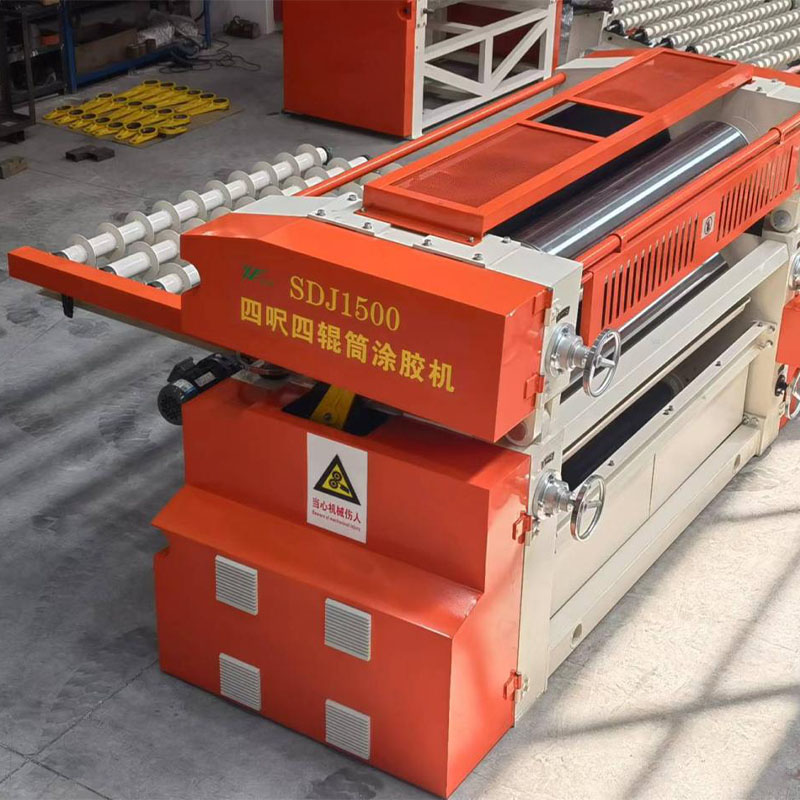
The SDJ1500 Espalhador de cola de quatro rolos de 1,2 m applies adhesive to core veneer. Evaluate it if all the sheets assigned to the station can pass through in the intended orientation with room for normal feeding variation. A mill that only occasionally handles a wider format can compare the cost and handling of a separate route for those sheets with the cost of installing a wider unit on the main line.
Evaluate an 8-Foot Model for Wider Veneer
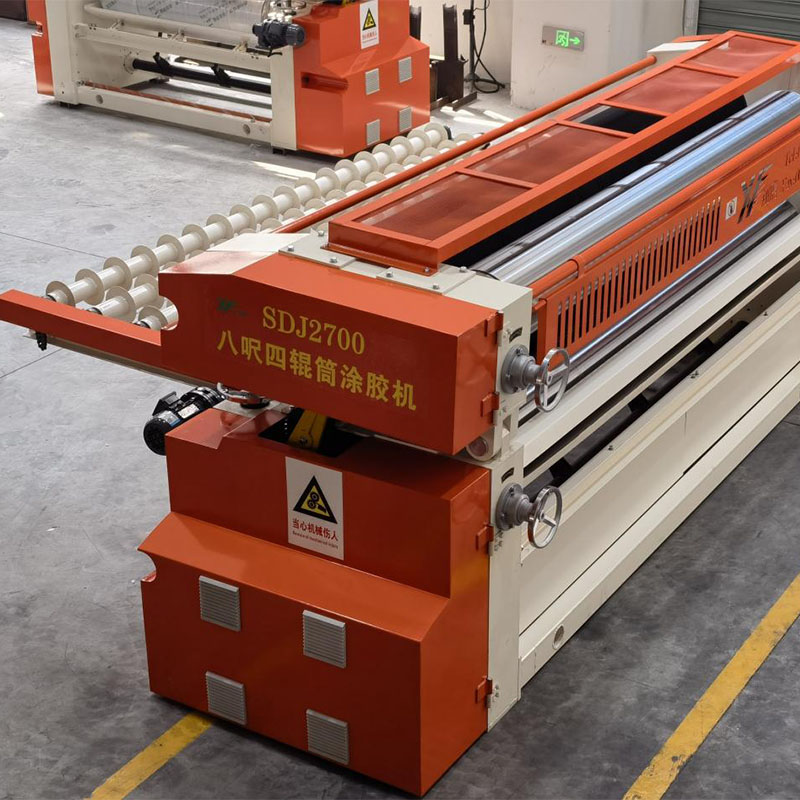
The SDJ2700 Espalhador de cola de quatro rolos de 8 pés is the wider option in the same product family. Consider it when the veneer must span more of the rollers because of the sheet format or the feed direction required by the line. If the machine will also run narrow stock, include it in the trial. A successful run on the widest sheet does not establish how readily a team can return to its most common narrower format.
Check How the Selected Width Fits the Plywood Line
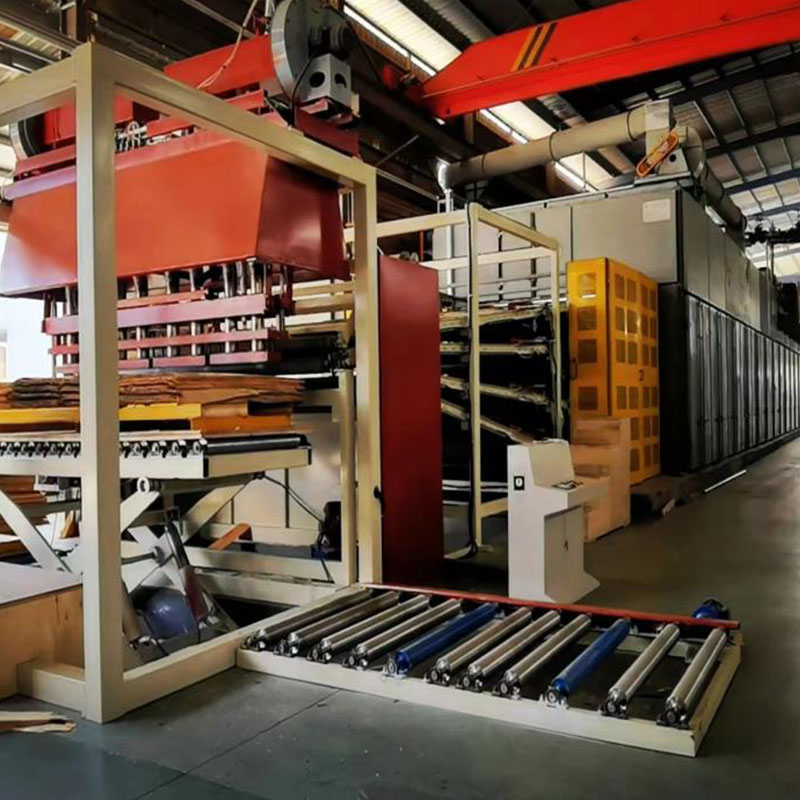
Once a machine can handle the sheet width, follow a sheet from infeed through discharge. Check that transfer tables and guides support it and that the outfeed can pass it toward layup without an extra turn or awkward handoff. Compare the installation drawings, including space to approach the machine for cleaning and roller service. A wider coating station solves little if an existing conveyor or aisle still constrains how material reaches it.
Also compare production rate at the station with what the layup crew can accept. Working width describes the sheet format the machine can accommodate. The practical rate for the line depends on feeding, coating and downstream handling. When comparing four-roller glue spreader configurations, check how the operator changes between the formats you run most often. A wider machine may fit every format on paper, yet frequent adjustments between short runs can still affect the amount of usable veneer the station delivers over a shift.
Verify Coverage and Handling in a Trial
Include a typical sheet, the widest sheet and any thin or irregular stock that routinely goes through the station. Agree on the adhesive, process settings and method for checking spread before the trial. Look at both edges and the centre of the sheet after coating. Full-width coverage on a single sample is helpful, but several consecutive sheets show whether the normal feed method can repeat the result.
If a sample misses glue at one edge, look for a pattern. A dry strip that moves when the sheet moves sideways calls for checking guidance or usable width. Streaks on a well-centred sample can be a coating or roller condition issue. Document where the problem occurs so the supplier can distinguish a size mismatch from a process adjustment.
For a mixed-format trial, run the wider sheet and then switch back to the narrower stock the way operators would during a regular shift. Record any changes to guides or coating settings and retain samples from both formats. This provides a basis for comparing how much setup work each option adds when the mill changes products.
Glue Spreader Selection Support From Xiangying
Xiangying manufactures four-roller glue spreaders for core veneer. To compare its two widths, start with your largest untrimmed sheet and its intended feeding direction. Ask for the usable coating width and installation dimensions for the proposed configuration. A photo or simple sketch of the infeed and layup stations helps explain whether the sheet must stay in the same orientation.
Conclusion
Choose the width that covers the veneer you actually feed, with room for normal handling variation. Confirm the choice on a representative trial and check the transfer to layup before purchase. This gives the mill a practical basis for choosing between 4-foot and 8-foot equipment.
FAQs
Can an 8-Foot Glue Spreader Run Narrower Sheets?
It may be suitable, depending on the machine configuration and how you guide the sheets. Include the narrowest regular format in the trial and check coverage after changing formats.
Should the Purchase Specification Use Inches or Millimetres?
Either unit works. Use the same unit throughout the RFQ and state which dimension runs across the rollers. Ask the supplier to confirm the usable width in that unit.
Does Choosing a Wider Glue Spreader Reduce Glue Consumption?
Width determines the format the machine can handle. To assess consumption, compare the applied glue mass per unit area for the same veneer and adhesive under comparable operating conditions.


Produtos relacionados
Produtos mais vendidos
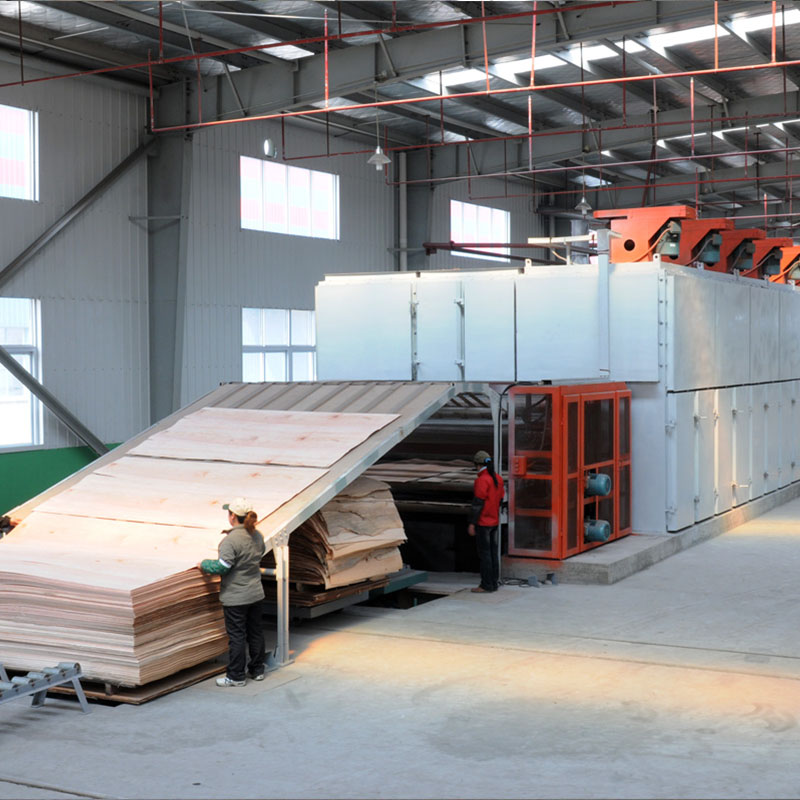
Secador de lâminas combinado de rolos de malha de três decks BG1933B
Nosso produto é um tipo de secador de rolos com rede e circulação transversal de transporte reto, equipado com estruturas de rede e rolos. O secador de lâminas de madeira com rede e rolos possui duas camadas de rede e rolos; ele pode secar simultaneamente lâminas de revestimento e lâminas de núcleo espesso. Apresenta as vantagens de ocupar menos espaço e ser multifuncional em uma única máquina.
Nosso produto é um secador de rolos com circulação transversal e transporte reto, que combina as vantagens dos secadores europeus. Ele utiliza ventiladores centrífugos laterais (vazão de ar de 62.000 m³/h). Um novo trocador de calor e caixas de pulverização retangulares com seção transversal variável garantem a uniformidade da superfície da lâmina de madeira para o aquecimento do ar. Os ventiladores das seções de aquecimento frontal e traseira são instalados à esquerda e à direita, garantindo que as lâminas apresentem a mesma umidade final após a secagem. Além disso, para climas úmidos, o secador possui seções abertas de resfriamento, o que evita a umidade excessiva nas lâminas.
O sistema de aquecimento da secadora utiliza caldeira a vapor ou a óleo. Quando se utiliza caldeira a óleo, é necessário conhecer as normas de segurança do sistema. Os tubos do sistema de aquecimento e os permutadores de calor devem ser protegidos contra depósitos de carbono e incêndios. Não se deve permitir a entrada de água, substâncias ácidas ou materiais com baixo ponto de ebulição no sistema.
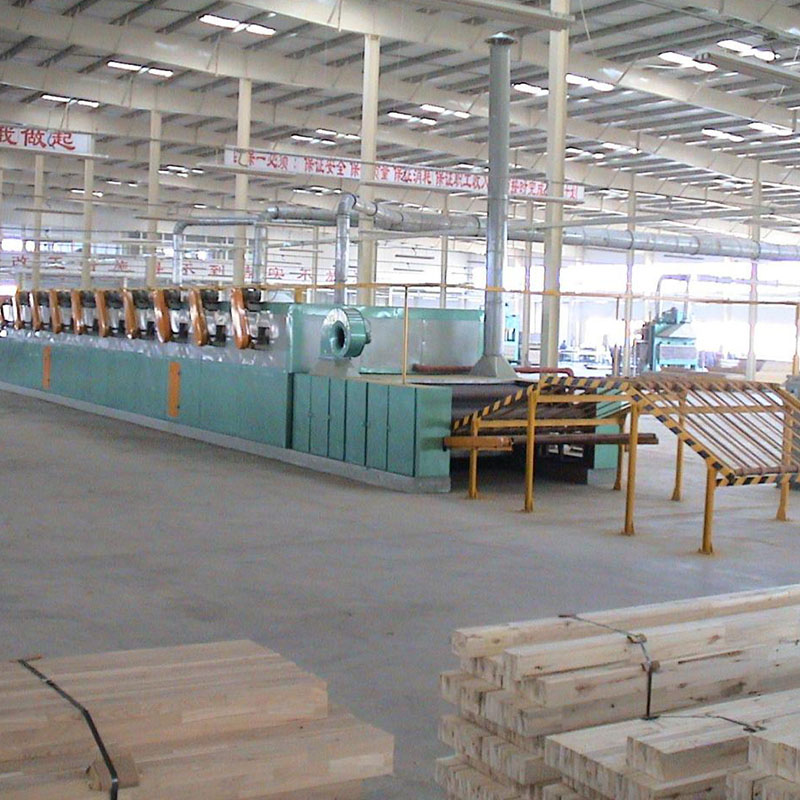
Secador de lâminas combinado de rolos de malha de dois decks BG1932
O secador de lâminas BG1932 de 2 camadas com rolos e tela possui dois tipos de camadas; ele pode secar simultaneamente lâminas de revestimento e lâminas de núcleo espesso. Suas vantagens incluem ocupar menos espaço e ser multifuncional em uma única máquina.
A secadora de rolos BG1932 foi projetada com base no princípio de estrutura unitária, sendo o modelo padrão de 10 seções. Cada seção possui 2 metros quadrados de área de secagem, câmara de resfriamento, sistema de acionamento, mesa de rolos de entrada e mesa de rolos de saída. O cliente pode escolher o número de seções da secadora de acordo com suas necessidades (de 5 a 15 seções).
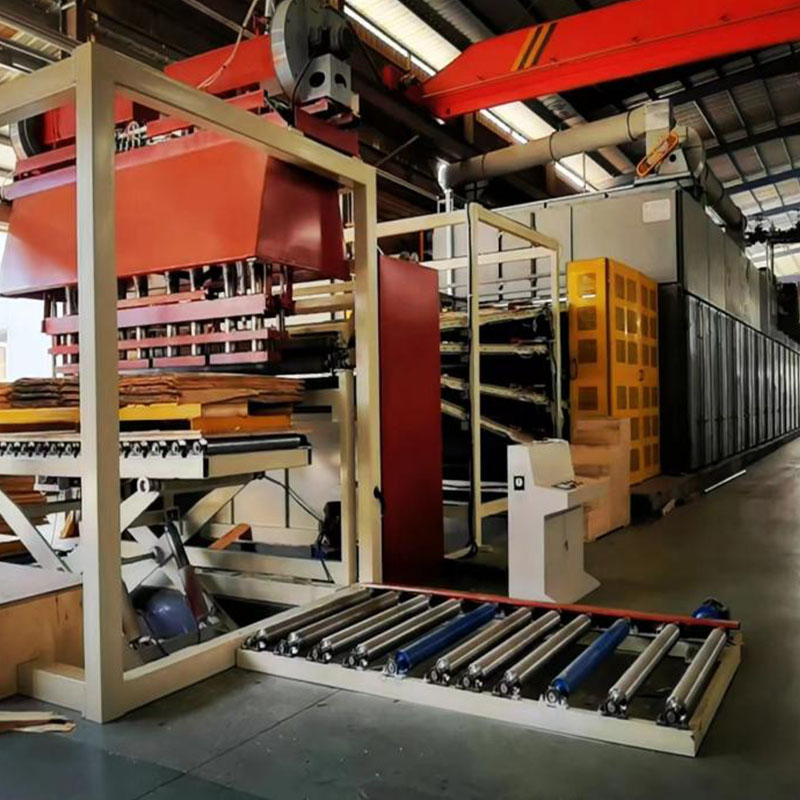
Secador de lâminas de rolo de quatro decks BG1334
O secador de lâminas de rolos de jateamento BG1334 de 4 decks consiste em sistema de transporte, seção de aquecimento, sistema de vapor, seção de resfriamento, sistema de exaustão e sistema de rolos de entrada e saída. A seção de aquecimento é composta por duas partes, frontal e traseira, com ventiladores de aquecimento instalados em ambos os lados para garantir umidade final consistente em cada ponto.
No processo de aquecimento, o ar é comprimido em aquecedores por ventiladores centrífugos verticais para aquecimento e, em seguida, comprimido em foles de jato. Posteriormente, o ar quente é injetado sobre as lâminas transportadas entre rolos para secagem. O ar quente e úmido é então novamente aspirado pelos ventiladores centrífugos para circulação. Parte do ar quente e úmido é expelida através do sistema de exaustão, sendo substituída por ar fresco para manter a umidade adequada. O processo adapta-se às seguintes condições tecnológicas: primeiro, corte; segundo, secagem. É utilizado principalmente com placas de núcleo de lâminas para secagem. A orientação das lâminas secas deve ser a mesma das lâminas iniciais, e a largura deve ser superior a 350 mm, caso contrário, ocorrerá o fenômeno de aglomeração das lâminas.
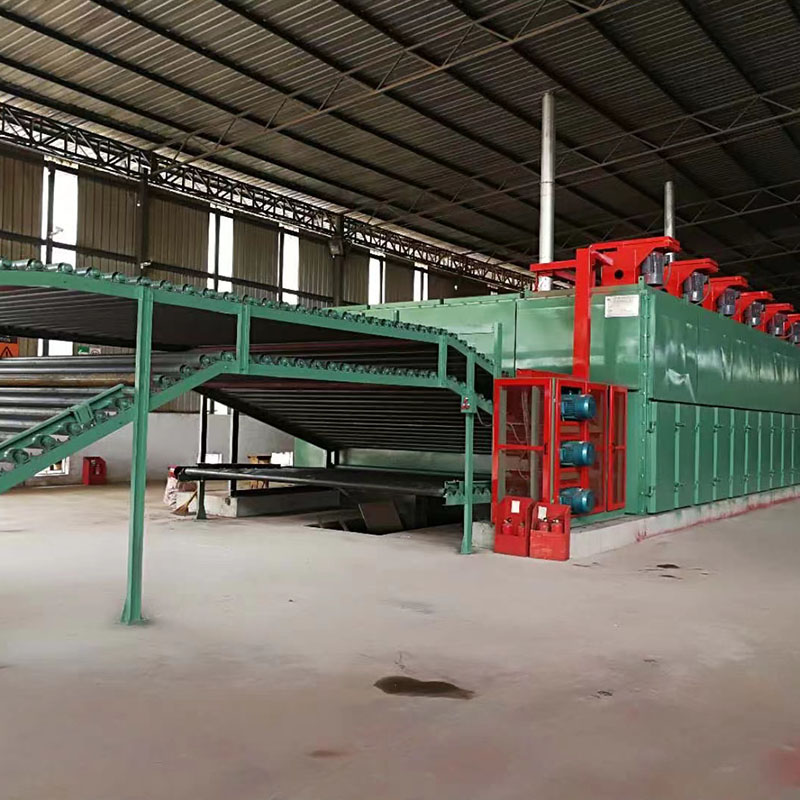
Secador de lâminas de rolo de três decks BG1333
O secador de lâminas de rolos de jateamento de 3 decks BG1333 consiste em sistema de transporte, seção de aquecimento, sistema de vapor, seção de resfriamento, sistema de exaustão e sistema de rolos de entrada e saída. A seção de aquecimento é composta por duas partes, frontal e traseira, com ventiladores de aquecimento instalados em ambos os lados para garantir umidade final consistente em cada ponto.
No processo de aquecimento, o ar é comprimido em aquecedores por ventiladores centrífugos verticais para aquecimento e, em seguida, comprimido em foles de jateamento. Posteriormente, o ar quente é jateado sobre lâminas de madeira transportadas entre rolos para secagem. O ar quente e úmido é então novamente aspirado por ventiladores centrífugos para circulação. Parte do ar quente e úmido é expelida através de um sistema de exaustão, sendo substituída por ar fresco para manter a umidade adequada.
Adapta-se às condições tecnológicas: primeiro, corta; segundo, seca. Utiliza-se principalmente placas de núcleo de lâminas de madeira para secagem. A orientação das lâminas secas é a mesma das lâminas iniciais, e a largura deve ser superior a 350 mm, caso contrário, ocorrerá o fenômeno de aglomeração das lâminas.
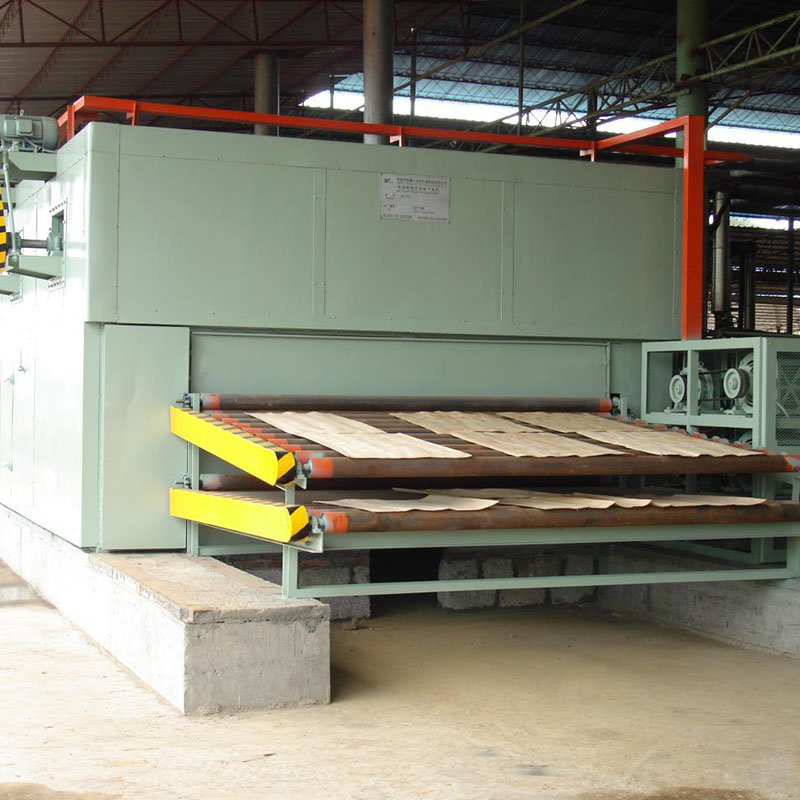
Secador de lâminas de rolo de dois decks BG1332
O secador de lâminas de madeira BG1332, com rolos de jateamento de dois decks, é um equipamento essencial na produção de lâminas de madeira. Adapta-se às seguintes condições tecnológicas: primeiro, cortar; segundo, secar. É utilizado principalmente para a secagem de lâminas de madeira maciça. A orientação das fibras da lâmina seca deve ser a mesma da lâmina de entrada, e a largura deve ser superior a 350 mm, caso contrário, ocorrerá o fenômeno de aglomeração das lâminas. Há um ventilador em cada área de secagem; adota um método de jateamento transversal com circulação direta, permitindo a entrada de calor e a saída da umidade, acelerando significativamente o processo de secagem. Além disso, garante uma secagem uniforme da lâmina, reduzindo a taxa de empenamento. O produto apresenta diversas vantagens: facilidade de manutenção, confiabilidade e segurança. Portanto, é um produto ideal para a secagem de lâminas espessas no processo de produção de lâminas de madeira.
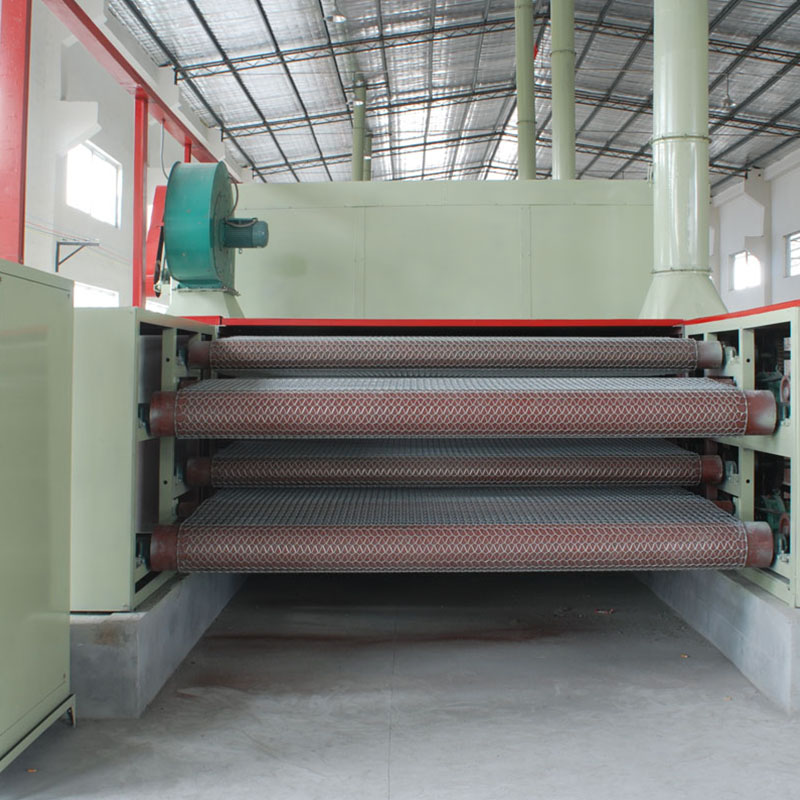
Secador de lâminas de madeira com correia de malha de dois decks BG183
Nosso produto é um secador de esteira com jato vertical de circulação transversal, um tipo de equipamento de secagem contínua. Ele pode ser aplicado no processo de secagem de lâminas de madeira, tanto superiores quanto inferiores, para a produção de molduras arquitetônicas, painéis para marcenaria, pisos, fundos de contêineres, entre outros. Com dimensões reduzidas e maior versatilidade, e incorporando as vantagens dos mais avançados secadores de lâminas de madeira, tanto nacionais quanto internacionais, nosso produto foi projetado para ser econômico, confiável e de alta qualidade. Garantimos o aumento da produtividade, a melhoria dos produtos, a redução do consumo de energia e dos custos de produção, além de um aumento satisfatório da rentabilidade.
O modelo padrão inclui 13 seções de aquecimento, uma seção de resfriamento (à esquerda), e podemos adicionar ou remover seções de aquecimento conforme necessário e ajustar o tipo de cabeçote para atender às suas demandas de produção, considerando rendimento, disposição e localização. Faremos o possível para ajudá-lo a obter a maior capacidade de produção com o menor investimento.