
ABOUT US
Xiangying is a professional manufacturer of veneer dryers and plywood equipment.
Our 18,000 m² site includes 15,000 m² of buildings, supporting product development, manufacturing and service for customers in China and overseas.
GET A FREE QUOTE
Error: Contact form not found.
-
Home

-
Blog
-
News Updates
- 4-Foot vs. 8-Foot Glue Spreader for Plywood: How to Choose the Right Width
4-Foot vs. 8-Foot Glue Spreader for Plywood: How to Choose the Right Width
-
 admin
- 26,November
When buying a glue spreader for plywood, size it for the widest piece of veneer that will actually pass through the rollers. A 4-foot machine is a candidate when the production mix fits its usable coating width in the intended feed direction. An 8-foot machine is worth evaluating when wider sheets must enter without being turned or split. The dimensions of the finished panel are a starting point. The untrimmed veneer and how the line feeds it determine the working width you need.
Measure the Veneer That Will Enter the Glue Spreader
Start at the gluing station. The feeder sees the sheet that arrives from trimming, grading or composing, which may be a different size from the panel listed on the order. Record the actual dimensions and feeding direction for each product family the machine must handle.
Identify the Dimension Across the Rollers
For a rectangular sheet, width means the dimension perpendicular to travel. For example, a sheet that is 1,250 mm by 2,500 mm presents a different width when it feeds short edge first than when it feeds long edge first. Check the conveyor layout and the required grain direction in the layup before assuming the operator can turn the sheet. Turning it at the spreader only works if the line can deliver it to the next station in the required orientation.
Allow for Oversize Sheets and Feeding Variation
Measure stock at the condition in which it will be glued, including any allowance for later trimming. If the edges vary or the sheet runs slightly off centre, the usable coated area must still cover the required portion of the veneer. Ask how the supplier defines usable coating width, whether it differs from roller face length, and what feeding clearance the machine needs. A width label alone cannot settle a borderline fit.
Compare 4-Foot and 8-Foot Glue Spreaders Using the Same Sheet List
Use the measurements to compare both machines against the same production mix. Give the supplier the regular formats and the largest credible outlier, along with the orientation you intend to use. That makes it easier to distinguish an occasional special order from a width requirement that affects every shift.
Start With a 4-Foot Model for Narrower Feed Formats
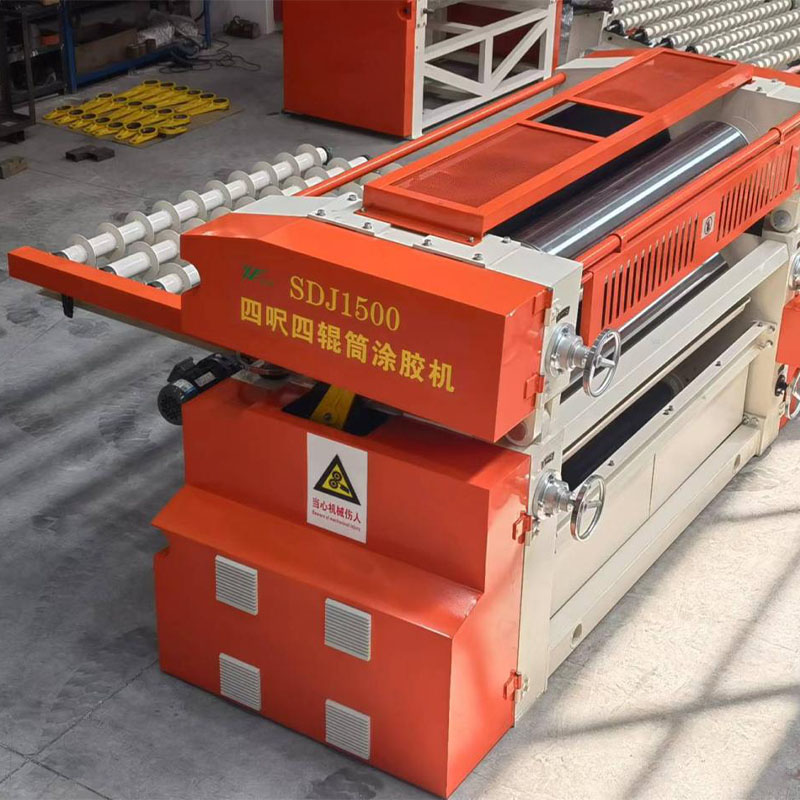
The SDJ1500 4-Foot Four-Roller Glue Spreader applies adhesive to core veneer. Evaluate it if all the sheets assigned to the station can pass through in the intended orientation with room for normal feeding variation. A mill that only occasionally handles a wider format can compare the cost and handling of a separate route for those sheets with the cost of installing a wider unit on the main line.
Evaluate an 8-Foot Model for Wider Veneer
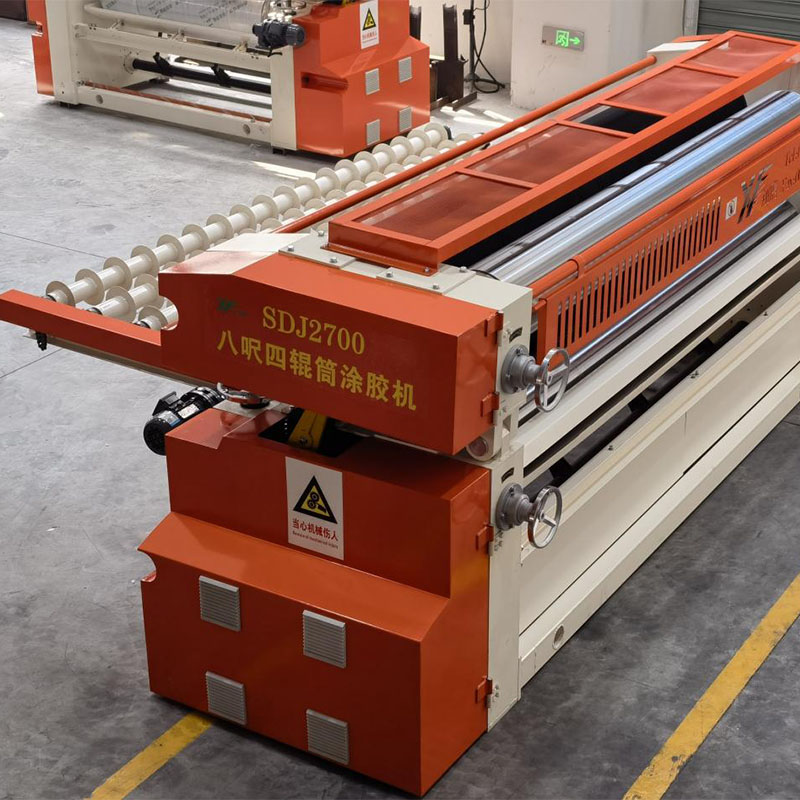
The SDJ2700 8-Foot Four-Roller Glue Spreader is the wider option in the same product family. Consider it when the veneer must span more of the rollers because of the sheet format or the feed direction required by the line. If the machine will also run narrow stock, include it in the trial. A successful run on the widest sheet does not establish how readily a team can return to its most common narrower format.
Check How the Selected Width Fits the Plywood Line
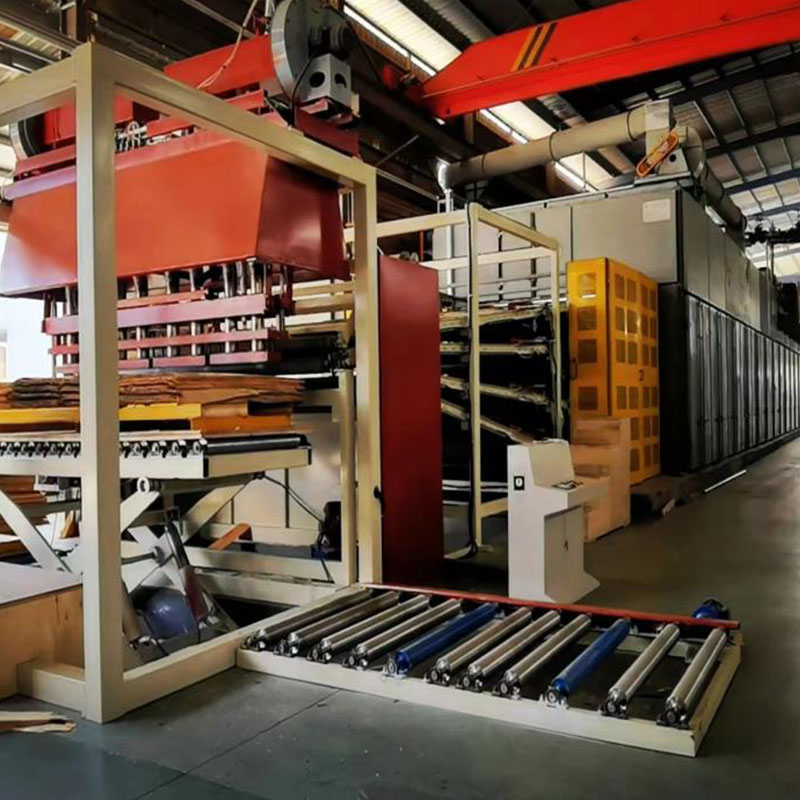
Once a machine can handle the sheet width, follow a sheet from infeed through discharge. Check that transfer tables and guides support it and that the outfeed can pass it toward layup without an extra turn or awkward handoff. Compare the installation drawings, including space to approach the machine for cleaning and roller service. A wider coating station solves little if an existing conveyor or aisle still constrains how material reaches it.
Also compare production rate at the station with what the layup crew can accept. Working width describes the sheet format the machine can accommodate. The practical rate for the line depends on feeding, coating and downstream handling. When comparing four-roller glue spreader configurations, check how the operator changes between the formats you run most often. A wider machine may fit every format on paper, yet frequent adjustments between short runs can still affect the amount of usable veneer the station delivers over a shift.
Verify Coverage and Handling in a Trial
Include a typical sheet, the widest sheet and any thin or irregular stock that routinely goes through the station. Agree on the adhesive, process settings and method for checking spread before the trial. Look at both edges and the centre of the sheet after coating. Full-width coverage on a single sample is helpful, but several consecutive sheets show whether the normal feed method can repeat the result.
If a sample misses glue at one edge, look for a pattern. A dry strip that moves when the sheet moves sideways calls for checking guidance or usable width. Streaks on a well-centred sample can be a coating or roller condition issue. Document where the problem occurs so the supplier can distinguish a size mismatch from a process adjustment.
For a mixed-format trial, run the wider sheet and then switch back to the narrower stock the way operators would during a regular shift. Record any changes to guides or coating settings and retain samples from both formats. This provides a basis for comparing how much setup work each option adds when the mill changes products.
Glue Spreader Selection Support From Xiangying
Xiangying manufactures four-roller glue spreaders for core veneer. To compare its two widths, start with your largest untrimmed sheet and its intended feeding direction. Ask for the usable coating width and installation dimensions for the proposed configuration. A photo or simple sketch of the infeed and layup stations helps explain whether the sheet must stay in the same orientation.
Conclusion
Choose the width that covers the veneer you actually feed, with room for normal handling variation. Confirm the choice on a representative trial and check the transfer to layup before purchase. This gives the mill a practical basis for choosing between 4-foot and 8-foot equipment.
FAQs
Can an 8-Foot Glue Spreader Run Narrower Sheets?
It may be suitable, depending on the machine configuration and how you guide the sheets. Include the narrowest regular format in the trial and check coverage after changing formats.
Should the Purchase Specification Use Inches or Millimetres?
Either unit works. Use the same unit throughout the RFQ and state which dimension runs across the rollers. Ask the supplier to confirm the usable width in that unit.
Does Choosing a Wider Glue Spreader Reduce Glue Consumption?
Width determines the format the machine can handle. To assess consumption, compare the applied glue mass per unit area for the same veneer and adhesive under comparable operating conditions.


Related Products
Best-selling Products
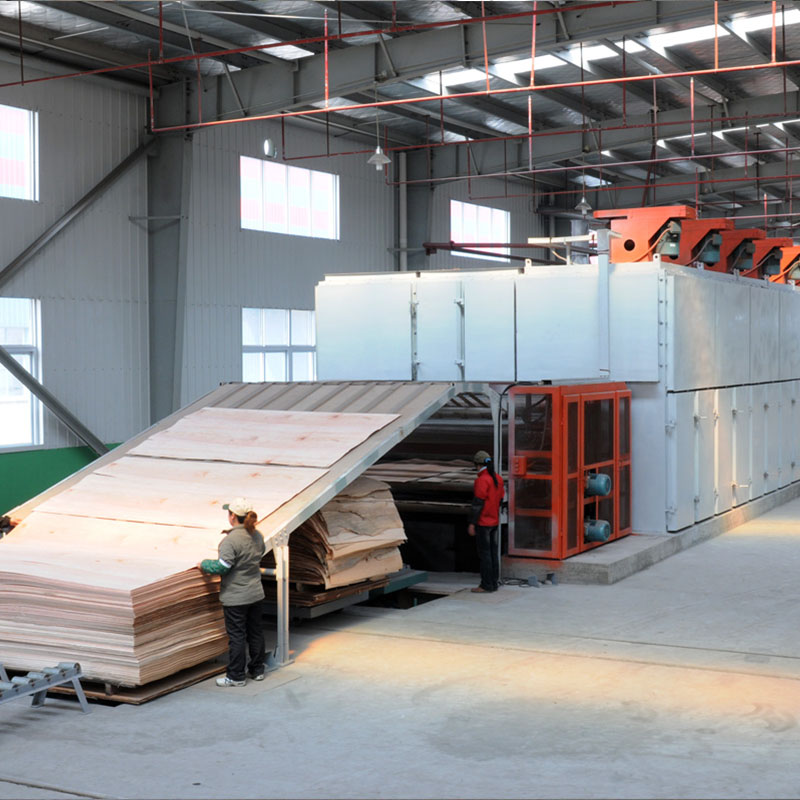
BG1933B Three-Deck Mesh-Roller Combined Veneer Dryer
Our product is a kind of straight-conveying transverse- circulating net-roller dryer, provided with both net and roller structures. net-roller veneer dryer has two kinds' layers of net and roller; it can be in process to dry for face plate and thick core plate at the same time. It has the advantages of less ground space and multi-use of one machine.
Our product is a kind of straight-conveying transverse- circulating net-roller dryer, combining advantages of European dryers. It uses the side equipped centrifugal fans( air flow 62 thousands m3/h). New heat exchanger and rectangle variable cross-section spray boxes make the veneer surface uniformity for heating air. Heating sections fans of front and back areas are equipped by left and right, so they make the veneers the same final humidity after dried. In addition, for the damp climate condition, the dyer adds the cooling open sections length, it is advantages for veneers cooling that it avoids getting damp.
The dryer's heating system use steam or oil boiler. When it uses the oil boiler, it needs to know the system safety, heating system tubes and heating exchangers should avoid carbon deposit and fire accident. Don't let water, acidity and low boiling point material into system.
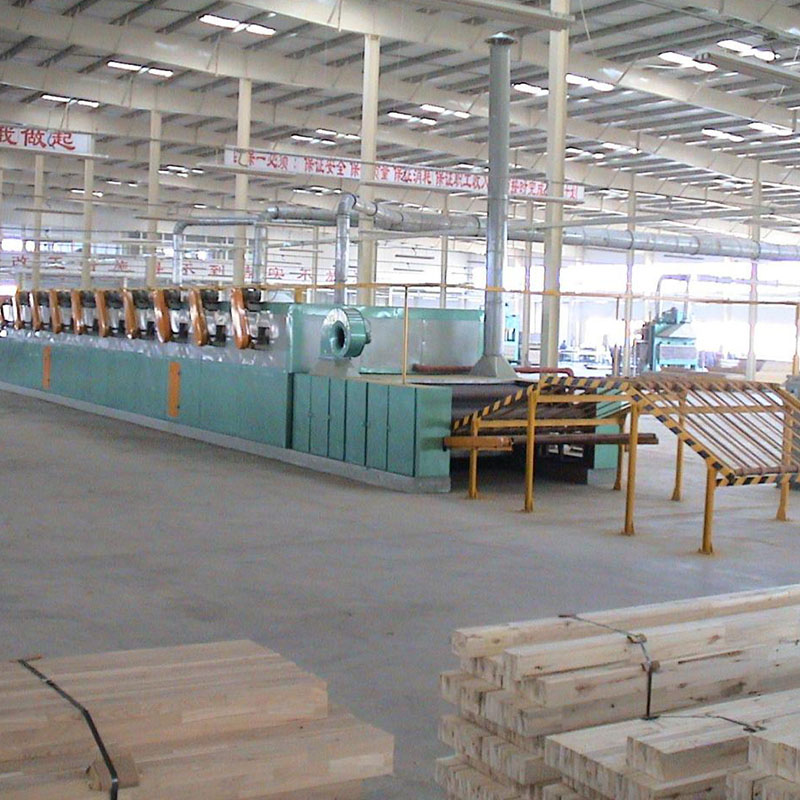
BG1932 Two-Deck Mesh-Roller Combined Veneer Dryer
BG1932 2-layers net-roller veneer dryer has two kinds' layers of net and roller; it can be in process to dry for face plate and thick core plate at the same time. It has the advantages of less ground space and multi-use of one machine.
The BG1932 net-roller dryer machine is designed by unit structure principle, the standard type is 10 sections. 2 meter as a standard for one dryer area, one section cooling room, one drive system, input roller table and output roller table. Customer can choose the sections of dryer machine according to your needs. (5 sections to 15 sections)
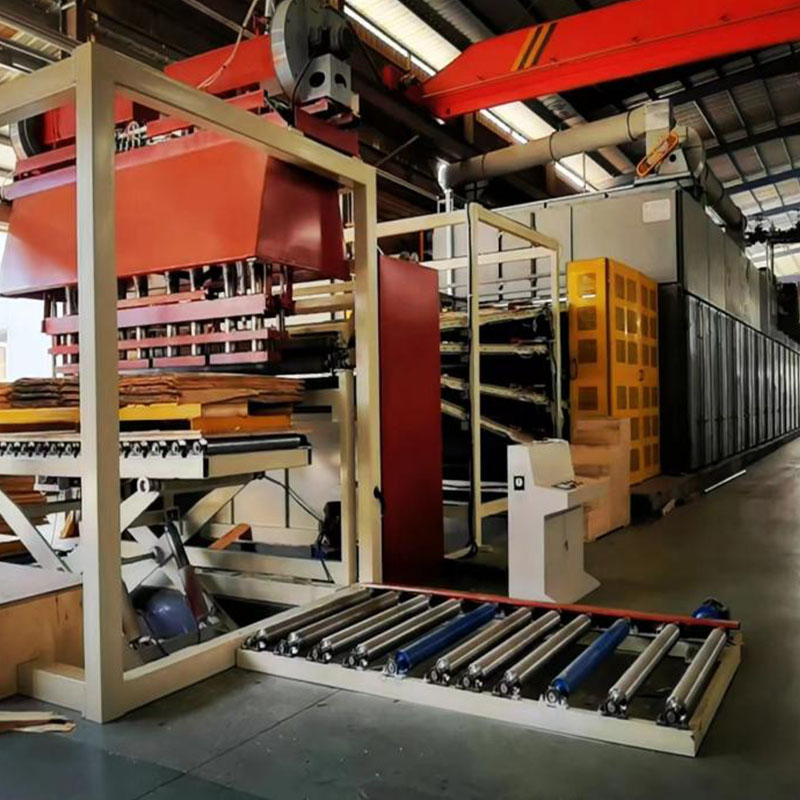
BG1334 Four-Deck Roller Veneer Dryer
BG1334 4-deck jetting roller veneer dryer consists conveying system, heating section, steam system, cooling section, exhausting system and input & output roller system. Heating section consists of two parts, front and back part, with heating fans set on both side to ensure consistent final moisture at each point.
In heating process, air is compressed into heaters by erect centrifugal fans for heating, and then compressed into jetting bellows. Afterwards, hot air is jetted onto veneers conveyed between rollers for drying. Hot damp air then again is drawed into centrifugal fans for a circular use. Part of hot damp air is exhausted through exhausting system in exchange of some fresh air to keep a proper air moisture. It adapt to the technologic conditions: first, cut; second, dry. It is mainly with drying core board of veneers. The stringy orientation of dry veneer is the same as inputting veneer, and the width should be more than 350mm, or it will be happened phenomenon of walling up veneers.
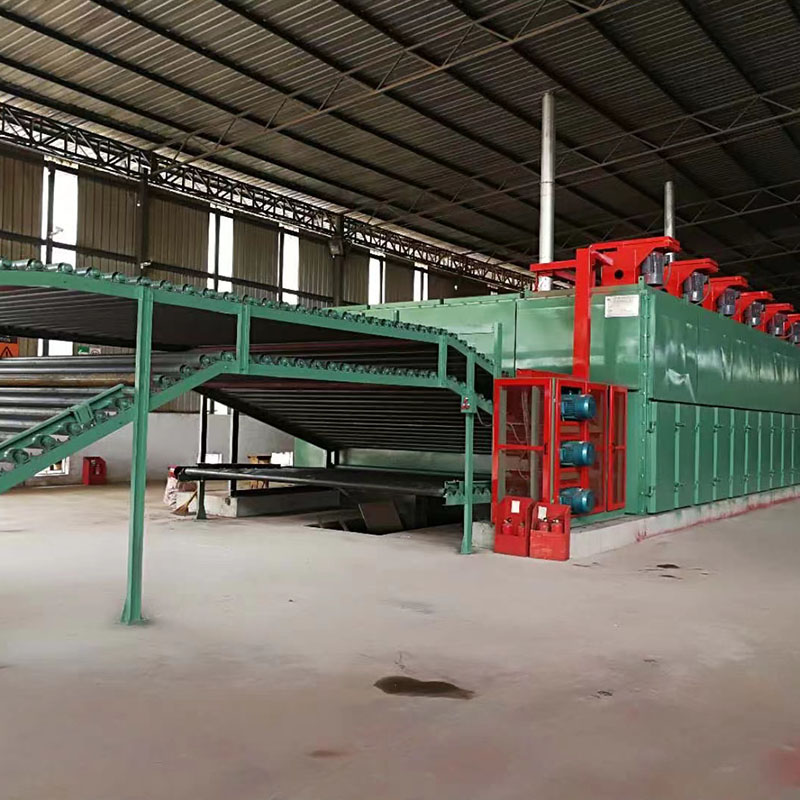
BG1333 Three-Deck Roller Veneer Dryer
BG1333 3-deck jetting roller veneer dryer consists conveying system, heating section, steam system, cooling section, exhausting system and input & output roller system. Heating section consists of two parts, front and back part, with heating fans set on both side to ensure consistent final moisture at each point.
In heating process, air is compressed into heaters by erect centrifugal fans for heating, and then compressed into jetting bellows. Afterwards, hot air is jetted onto veneers conveyed between rollers for drying. Hot damp air then again is drawed into centrifugal fans for a circular use. Part of hot damp air is exhausted through exhausting system in exchange of some fresh air to keep a proper air moisture.
It adapt to the technologic conditions: first, cut; second, dry. It is mainly with drying core board of veneers. The stringy orientation of dry veneer is the same as inputting veneer, and the width should be more than 350mm, or it will be happened phenomenon of walling up veneers.
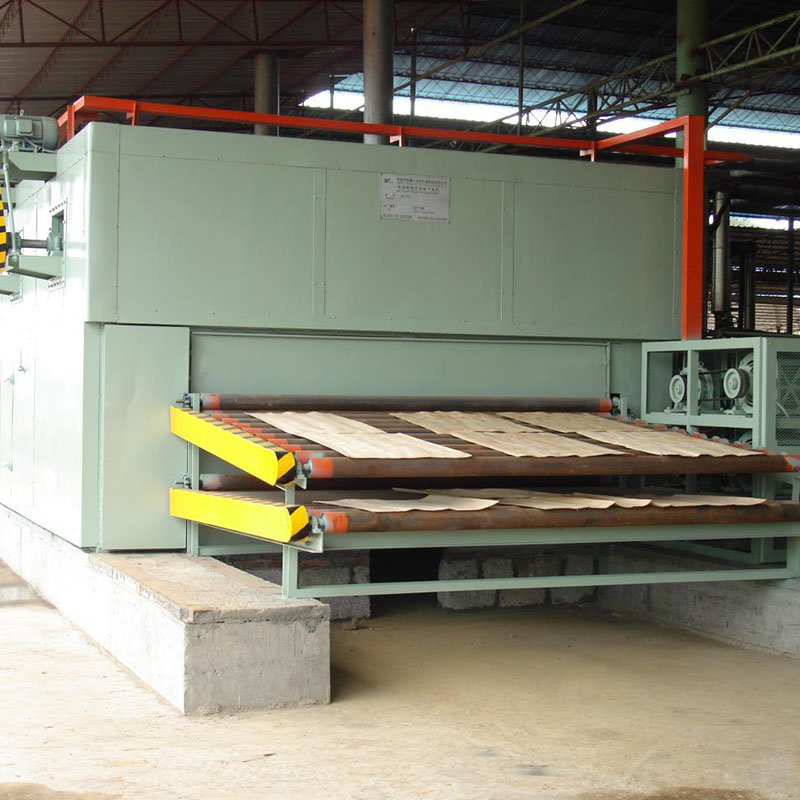
BG1332 Two-Deck Roller Veneer Dryer
BG1332 2-deck jetting roller veneer dryer is a main equipment of producing veneer. It adapt to the technologic conditions: first, cut second, dry. It is mainly with drying core board of veneers. The stringy orientation of dry veneer is the same as inputting veneer, and the width should be more than 350mm, or it will be happened phenomenon of walling up veneers. There is a ventilator in every unit dry area; it adopts straight-conveying transverse - circulating jetting way, and it lets heat put into and make humidity (wet) vent, quicken the dry pace much. Also, it makes the veneer dry be well-proportioned, reduce warp of the hydrous rate. The product has some advantages: maintain convenience, trusty safe and so on. So this is a perfect product for drying thick veneers in producing veneers process.
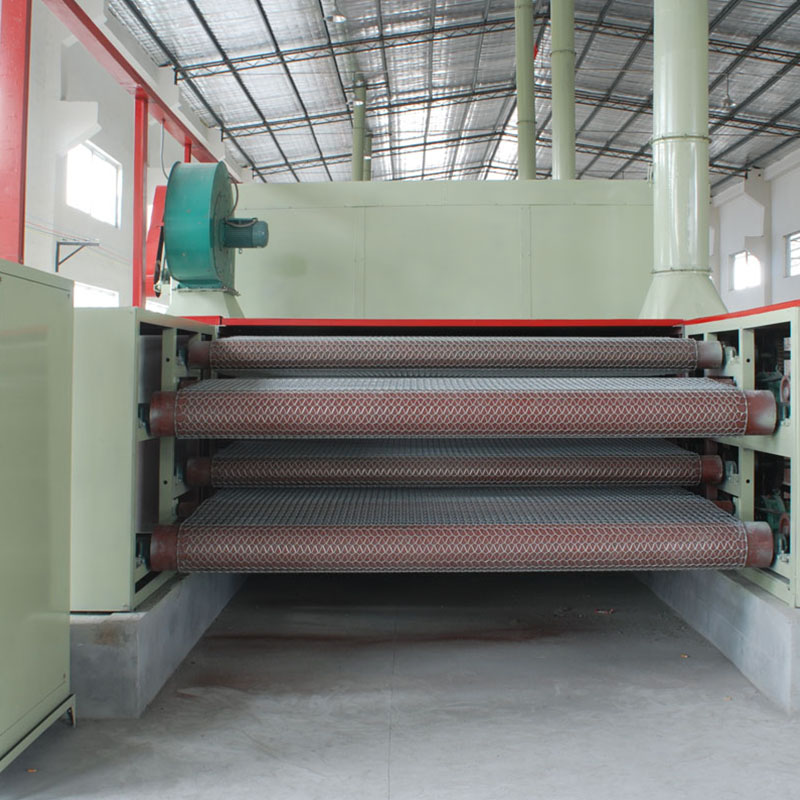
BG183 Two-Deck Mesh Belt Veneer Dryer
Our product is a kind of transverse-circulating vertical-jetting belt dryer, a kind of continuous drying equipment. Our product can be applied for the drying process of top and bottom veneer, which can be used to produce architectural moulding board, joinery board, floor board, container bottom board, and so on. eatured with less acreage and more usage, applied with the advantages of the advanced veneer dryers in and abroad, and designed for the purpose of economy, trustiness and high grade, our product guarantees a promotion of yield, an improvement of products, a cut of energy consuming and production cost, as well as satisfactory increasing benefit.
The standard type includes 13 heating sections, one cooling section (leftward) , and we can add or remove proper heating sections and adjust the heading type in order to meet your demands of production, concerning yield, arrangement and location. We'll do our best to help you obtain the most producing capability with the least investment.