
ABOUT US
Xiangying is a professional manufacturer of veneer dryers and plywood equipment.
Our 18,000 m² site includes 15,000 m² of buildings, supporting product development, manufacturing and service for customers in China and overseas.
GET A FREE QUOTE
Error: Contact form not found.

Mesh & Roller Combined Veneer Dryers
Combined dryers integrate mesh and roller conveying in one machine, allowing face veneer and thick core veneer to be processed within a compact footprint.
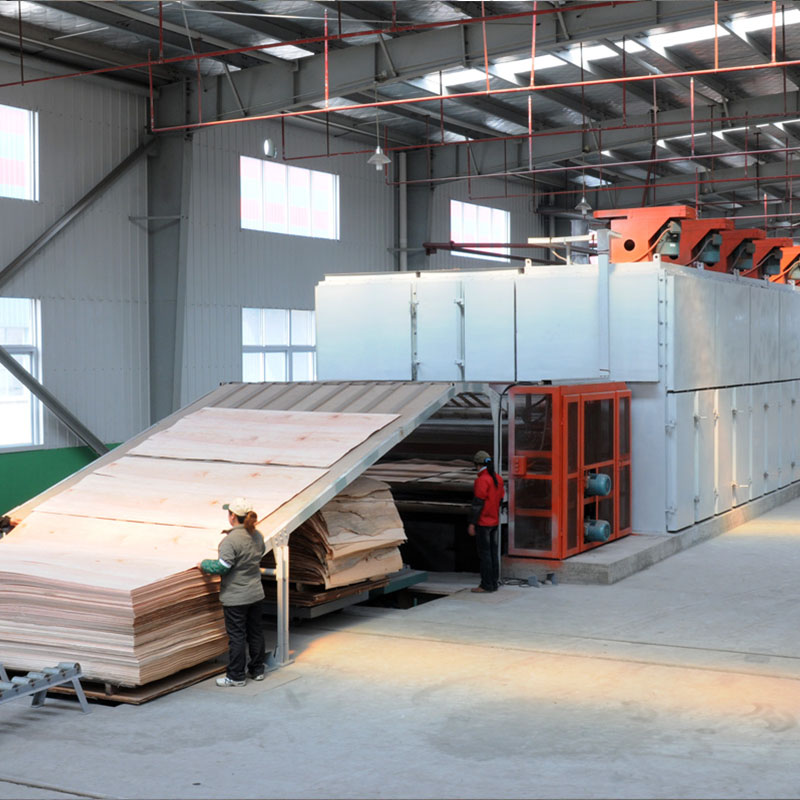
BG1933B Three-Deck Mesh-Roller Combined Veneer Dryer
Our product is a kind of straight-conveying transverse- circulating net-roller dryer, provided with both net and roller structures. net-roller veneer dryer has two kinds' layers of net and roller; it can be in process to dry for face plate and thick core plate at the same time. It has the advantages of less ground space and multi-use of one machine.
Our product is a kind of straight-conveying transverse- circulating net-roller dryer, combining advantages of European dryers. It uses the side equipped centrifugal fans( air flow 62 thousands m3/h). New heat exchanger and rectangle variable cross-section spray boxes make the veneer surface uniformity for heating air. Heating sections fans of front and back areas are equipped by left and right, so they make the veneers the same final humidity after dried. In addition, for the damp climate condition, the dyer adds the cooling open sections length, it is advantages for veneers cooling that it avoids getting damp.
The dryer's heating system use steam or oil boiler. When it uses the oil boiler, it needs to know the system safety, heating system tubes and heating exchangers should avoid carbon deposit and fire accident. Don't let water, acidity and low boiling point material into system.
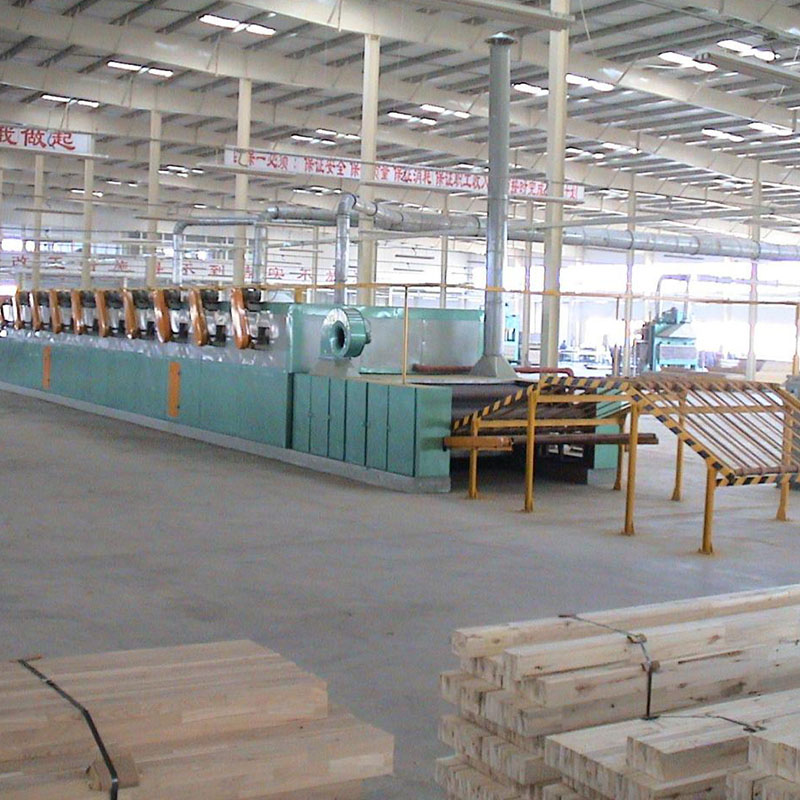
BG1932 Two-Deck Mesh-Roller Combined Veneer Dryer
BG1932 2-layers net-roller veneer dryer has two kinds' layers of net and roller; it can be in process to dry for face plate and thick core plate at the same time. It has the advantages of less ground space and multi-use of one machine.
The BG1932 net-roller dryer machine is designed by unit structure principle, the standard type is 10 sections. 2 meter as a standard for one dryer area, one section cooling room, one drive system, input roller table and output roller table. Customer can choose the sections of dryer machine according to your needs. (5 sections to 15 sections)
FREQUENTLY ASKED QUESTIONS
Have Any Questions
-
How to choose the right dryer model?
The veneer type, veneer dimensions, thickness, initial moisture content, final moisture content, and daily production volume (calculated over 24 hours) are all taken into account.Generally, a mesh dryer is chosen for veneer thicknesses of 0.2mm to 1.5mm, and a roller dryer for 1.5-6mm.
-
Each one's pros and cons
The belt dryer is versatile; it can dry both thin and thick veneers. When dryers first came about, there were only belt dryers. Drum dryers were only gradually introduced from abroad and developed after 2000.
The only downside of a belt dryer is that the veneers aren't very flat after drying, especially those thicker than 1.5mm. So, except for pine, for other materials with veneers over 1.5mm thick, it's better to use a drum dryer. The veneers get pressed by the upper and lower rollers, and they come out flat!
But a roller dryer can't dry veneer thinner than 1.5mm, because the veneer is too thin and can slip through the gaps between the rollers, causing blockages! If the thickness is over 1.5mm, especially between 1.7mm and 6mm, roller dryers basically won't have any blockage issues. That's because our roller dryers and the spray box have a patented design. -
About choosing a type of dryer
Regarding choosing the type of dryer, if the customer's raw material wood is pine, then only a conveyor belt veneer dryer should be chosen because pine contains resin. After long working hours, the resin inside the veneer will stick to the rollers, and the more the resin accumulates on the rollers, the harder it becomes for the rollers to turn. Plus, once the resin dries, it's extremely tough and hard to clean! So only a conveyor belt dryer is suitable, a roller dryer can't be used.