
ABOUT US
Xiangying is a professional manufacturer of veneer dryers and plywood equipment.
Our 18,000 m² site includes 15,000 m² of buildings, supporting product development, manufacturing and service for customers in China and overseas.
GET A FREE QUOTE
Error: Contact form not found.
-
Home

-
Blog
-
Frequently Asked Questions
- Veneer Dryer Selection Guide: Net, Roller or Net-Roller Composite?
Veneer Dryer Selection Guide: Net, Roller or Net-Roller Composite?
-
 admin
admin - 7,July
A veneer dryer is not simply a heating tunnel. It is a production-control system that must move moisture out of wood at a predictable rate while preserving flatness, surface quality and usable yield. Choosing the wrong conveying structure can create bottlenecks that remain expensive for years: thin face veneer may wrinkle or break, thick core veneer may leave with an uneven moisture profile, and an oversized line may consume floor space and thermal energy without generating corresponding output.
For plywood, flooring, blockboard, container flooring and architectural formwork producers, the first practical choice is usually between a net veneer dryer, a roller veneer dryer and a net-roller composite veneer dryer. Each structure supports a different material mix. The right decision begins with the veneer—not with the machine brochure.
1. Start with the veneer mix
Before comparing deck counts or heating sections, define the material that will actually enter the dryer. Record the species, thickness range, green moisture range, sheet dimensions, target final moisture, desired daily output and the percentage of face versus core veneer. These variables determine the needed air distribution, conveying support, residence time and cooling capacity.
- Thin face veneer needs gentle, continuous support and uniform impingement air to reduce folding, edge damage and local overdrying.
- Thicker core veneer benefits from stable restraint and consistent heat transfer so moisture can migrate from the center without creating a wet core.
- A mixed product plant needs flexibility; drying face and core veneer in one line can reduce handling and floor-space demand when the configuration is designed for both.
- Humid climates require sufficient cooling and open sections so hot veneer does not readily regain moisture after leaving the heating zone.
2. Net veneer dryer: best suited to thin and delicate sheets
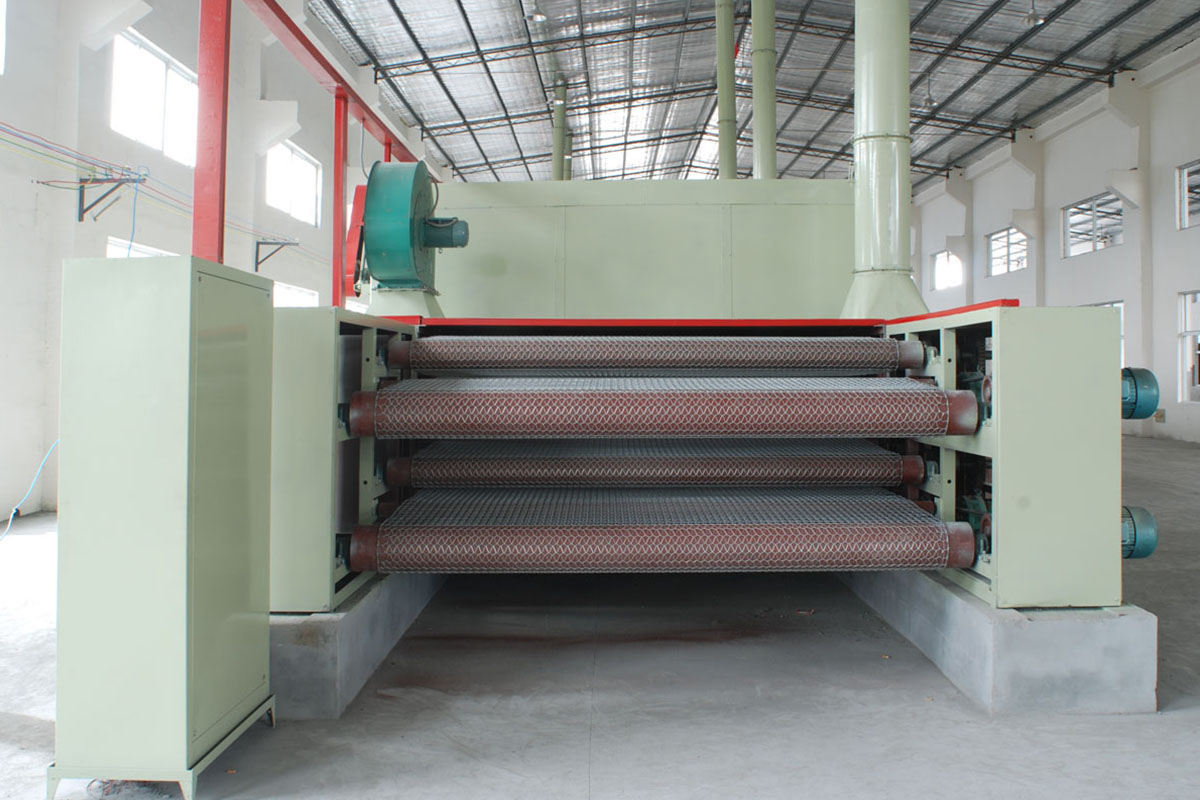
A net veneer dryer carries sheets on a mesh or belt through continuous heating sections. The broad support surface makes it well suited to thin face and back veneer, where stable conveying matters as much as evaporation rate. Xiangying’s multi-layer net dryers use a transverse-circulating, vertical-jetting concept and are offered in two-, three- and four-layer arrangements.
This format is especially relevant when the finished veneer will be used in decorative panels, joinery board, flooring, container bottom board or architectural formwork. A multi-layer layout increases effective drying area without requiring the footprint of several single-deck lines. Heating-section quantity can also be adjusted to production capacity and plant layout.
3. Roller veneer dryer: restraint for thicker core veneer
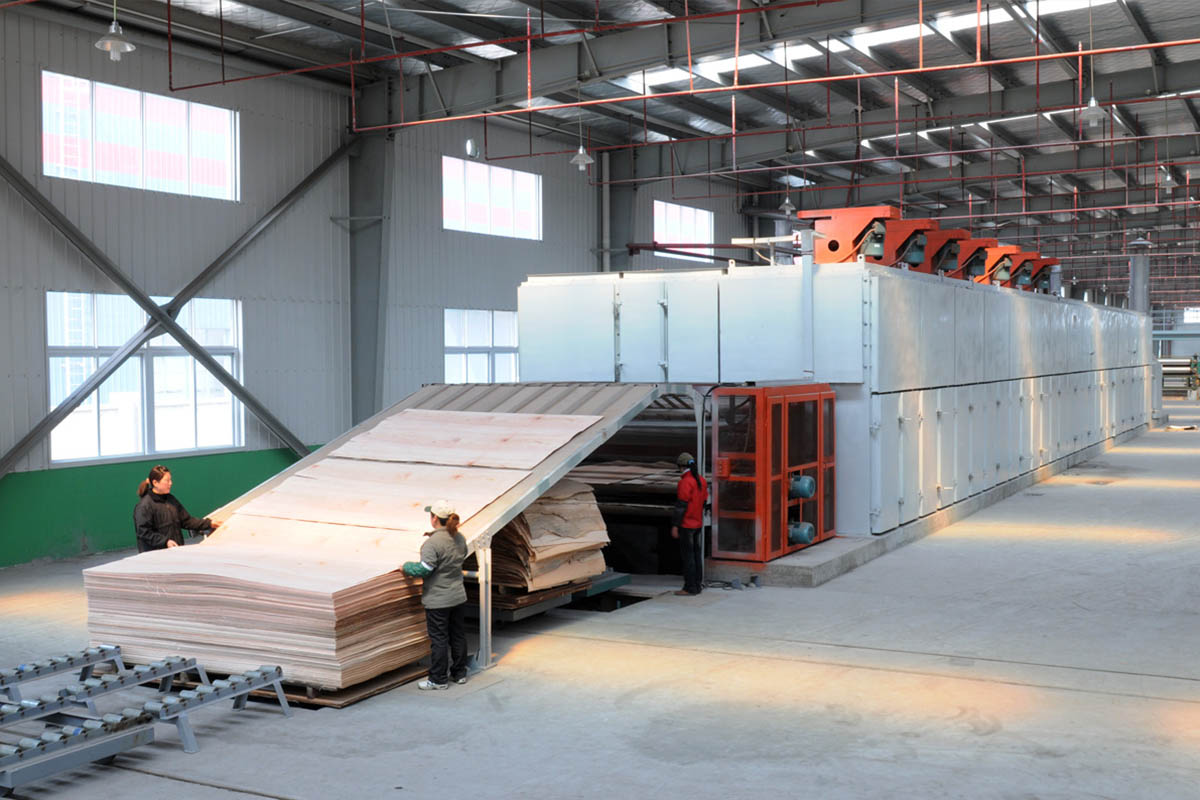
A roller veneer dryer conveys veneer between or across driven rollers. The mechanical support helps keep thicker core sheets controlled through heating and cooling. For mills producing structural plywood or multilayer panels, roller systems are commonly evaluated where flatness, reliable feeding and stable high-throughput operation are priorities.
The correct roller configuration still depends on species density, incoming moisture and sheet thickness. Output should never be judged by a nominal capacity alone. Ask the supplier to state the assumptions behind the figure, including temperature, initial and final moisture, veneer dimensions, operating hours and usable-yield definition.
4. Net-roller composite dryer: one line for a broader product mix
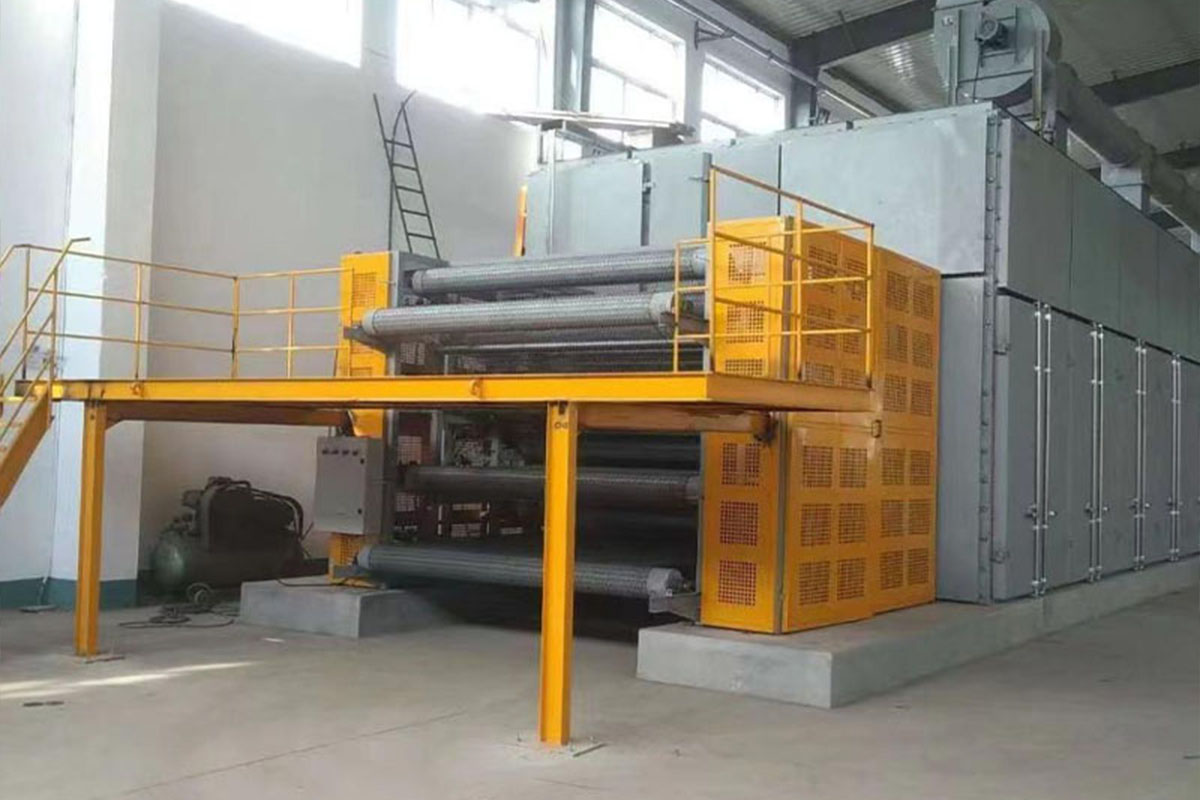
A net-roller composite veneer dryer combines net and roller conveying sections within one straight-conveying, transverse-circulating system. Its main value is production flexibility: face veneer and thicker core veneer can be processed in the same machine using structures matched to each material.
Xiangying’s composite design uses side-mounted centrifugal fans, updated heat exchangers and rectangular variable-cross-section jet boxes to distribute heated air across the veneer surface. Fans arranged on the left and right of the front and rear heating areas help balance final moisture. For factories with limited space or frequent product changes, this multi-use configuration can be more practical than two independent lines.
5. Compare configurations using operating data
| Decision factor | Net dryer | Roller dryer | Net-roller composite |
| Typical priority | Thin face/back veneer | Thicker core veneer | Mixed face + core production |
| Conveying support | Continuous mesh/belt | Driven roller structure | Both structures in one line |
| Plant fit | Dedicated thin-veneer flow | Core-focused, stable feeding | Flexible plants; constrained footprint |
| Key validation | Sheet handling and uniform air | Flatness and moisture through thickness | Changeover, balance and simultaneous loading |
6. Specify the complete thermal and moisture-control system
Dryer performance depends on more than decks and conveying style. The heating source may use steam or thermal oil; both require correctly engineered pipework, heat exchangers and safety controls. Airflow volume, jet-box geometry, exhaust balance, insulation, access doors and cooling length all influence energy use and moisture uniformity.
A professional quotation should therefore connect the dryer configuration to measurable acceptance conditions. At minimum, define the target final-moisture range, allowable sheet-to-sheet variation, capacity basis, heat-source parameters, electrical standard, available floor area, ambient conditions and commissioning responsibilities.
7. Questions to ask before requesting a quotation
- Which veneer species, thicknesses and green-moisture ranges were used to calculate capacity?
- How many heating and cooling sections are recommended, and why?
- How is air distributed across the working width to reduce left-to-right moisture variation?
- What heat source, temperature and thermal consumption are assumed?
- Can the line be adapted to the available building length, material flow and electrical standard?
- What installation, operator training, spare-parts and remote-support services are included?
Conclusion: choose for stable yield, not maximum nameplate output
The best veneer dryer is the configuration that produces saleable, consistently dried veneer under the mill’s real operating conditions. Net dryers are a strong fit for thin and delicate sheets; roller dryers provide controlled conveying for thicker core veneer; and net-roller composite dryers offer flexibility where face and core production must share space and utilities.
Xiangying manufactures multi-layer net, roller and net-roller composite veneer dryers and can adjust heating sections and layout around production requirements. Share your veneer thickness, species, initial and final moisture, sheet size, daily output, heat source and workshop dimensions to receive a configuration proposal.
FAQ
How many layers should a veneer dryer have?
The answer depends on required output, available footprint, veneer handling and thermal conditions. More layers increase effective drying area, but the complete airflow and loading plan must support them.
What determines actual veneer dryer capacity?
Drying temperature, species density, veneer thickness, initial moisture, target final moisture, sheet size and operating efficiency all affect capacity. Compare suppliers using the same stated assumptions.
Why is a cooling section important?
Cooling stabilizes hot veneer before stacking or downstream processing. In humid climates, adequate open cooling length also helps reduce rapid moisture regain.
Suggested internal links: Veneer Dryer category; 4 Layers Net Veneer Dryer; 3 Layers Net/Roller Veneer Dryer; 4 Layers Roller Veneer Dryer; Projects; Contact.
Related Products
Best-selling Products
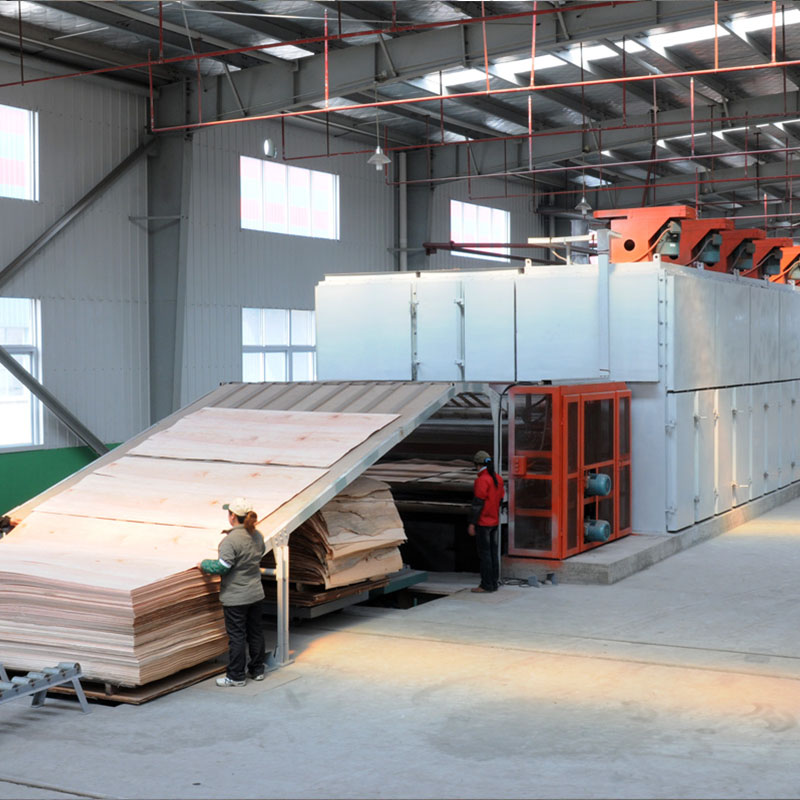
BG1933B Three-Deck Mesh-Roller Combined Veneer Dryer
Our product is a kind of straight-conveying transverse- circulating net-roller dryer, provided with both net and roller structures. net-roller veneer dryer has two kinds' layers of net and roller; it can be in process to dry for face plate and thick core plate at the same time. It has the advantages of less ground space and multi-use of one machine.
Our product is a kind of straight-conveying transverse- circulating net-roller dryer, combining advantages of European dryers. It uses the side equipped centrifugal fans( air flow 62 thousands m3/h). New heat exchanger and rectangle variable cross-section spray boxes make the veneer surface uniformity for heating air. Heating sections fans of front and back areas are equipped by left and right, so they make the veneers the same final humidity after dried. In addition, for the damp climate condition, the dyer adds the cooling open sections length, it is advantages for veneers cooling that it avoids getting damp.
The dryer's heating system use steam or oil boiler. When it uses the oil boiler, it needs to know the system safety, heating system tubes and heating exchangers should avoid carbon deposit and fire accident. Don't let water, acidity and low boiling point material into system.
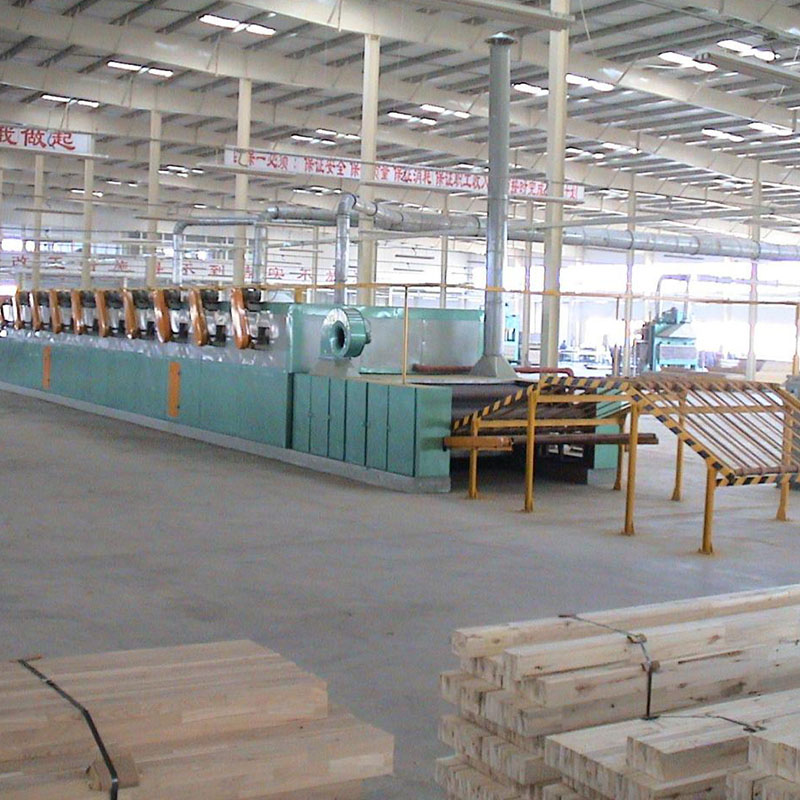
BG1932 Two-Deck Mesh-Roller Combined Veneer Dryer
BG1932 2-layers net-roller veneer dryer has two kinds' layers of net and roller; it can be in process to dry for face plate and thick core plate at the same time. It has the advantages of less ground space and multi-use of one machine.
The BG1932 net-roller dryer machine is designed by unit structure principle, the standard type is 10 sections. 2 meter as a standard for one dryer area, one section cooling room, one drive system, input roller table and output roller table. Customer can choose the sections of dryer machine according to your needs. (5 sections to 15 sections)
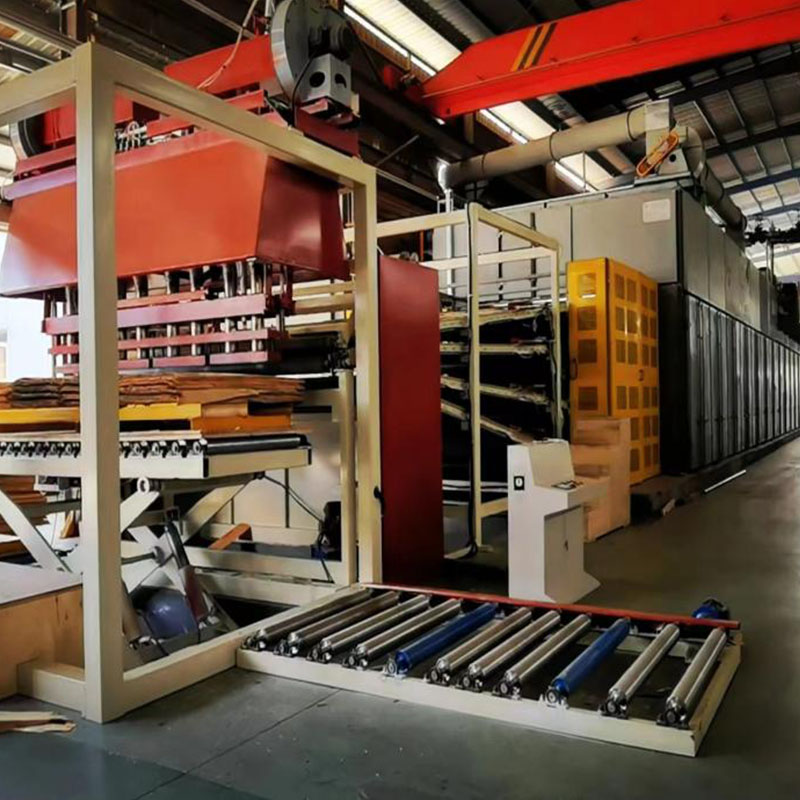
BG1334 Four-Deck Roller Veneer Dryer
BG1334 4-deck jetting roller veneer dryer consists conveying system, heating section, steam system, cooling section, exhausting system and input & output roller system. Heating section consists of two parts, front and back part, with heating fans set on both side to ensure consistent final moisture at each point.
In heating process, air is compressed into heaters by erect centrifugal fans for heating, and then compressed into jetting bellows. Afterwards, hot air is jetted onto veneers conveyed between rollers for drying. Hot damp air then again is drawed into centrifugal fans for a circular use. Part of hot damp air is exhausted through exhausting system in exchange of some fresh air to keep a proper air moisture. It adapt to the technologic conditions: first, cut; second, dry. It is mainly with drying core board of veneers. The stringy orientation of dry veneer is the same as inputting veneer, and the width should be more than 350mm, or it will be happened phenomenon of walling up veneers.
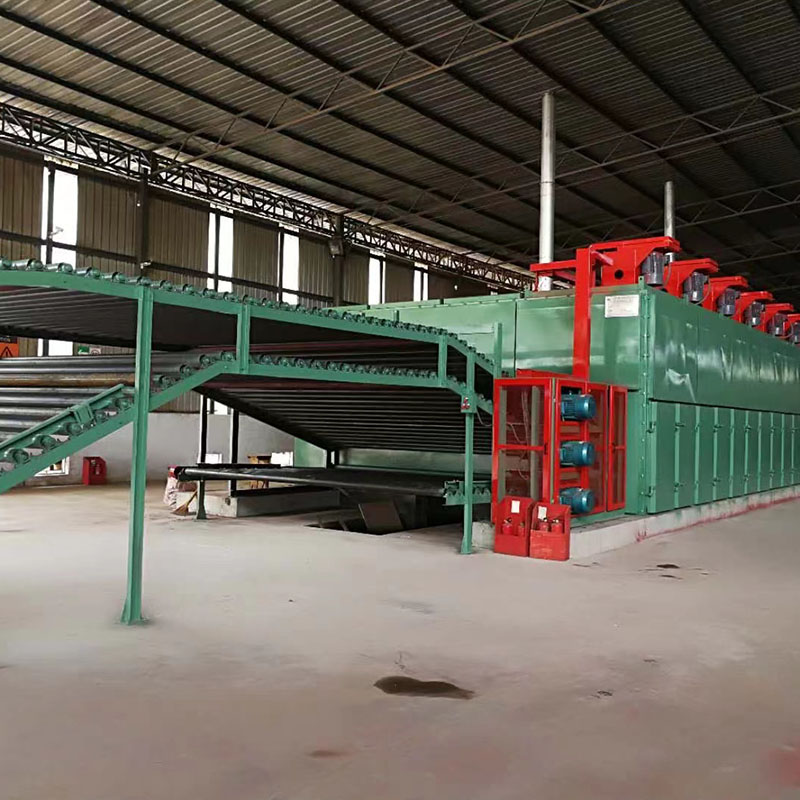
BG1333 Three-Deck Roller Veneer Dryer
BG1333 3-deck jetting roller veneer dryer consists conveying system, heating section, steam system, cooling section, exhausting system and input & output roller system. Heating section consists of two parts, front and back part, with heating fans set on both side to ensure consistent final moisture at each point.
In heating process, air is compressed into heaters by erect centrifugal fans for heating, and then compressed into jetting bellows. Afterwards, hot air is jetted onto veneers conveyed between rollers for drying. Hot damp air then again is drawed into centrifugal fans for a circular use. Part of hot damp air is exhausted through exhausting system in exchange of some fresh air to keep a proper air moisture.
It adapt to the technologic conditions: first, cut; second, dry. It is mainly with drying core board of veneers. The stringy orientation of dry veneer is the same as inputting veneer, and the width should be more than 350mm, or it will be happened phenomenon of walling up veneers.
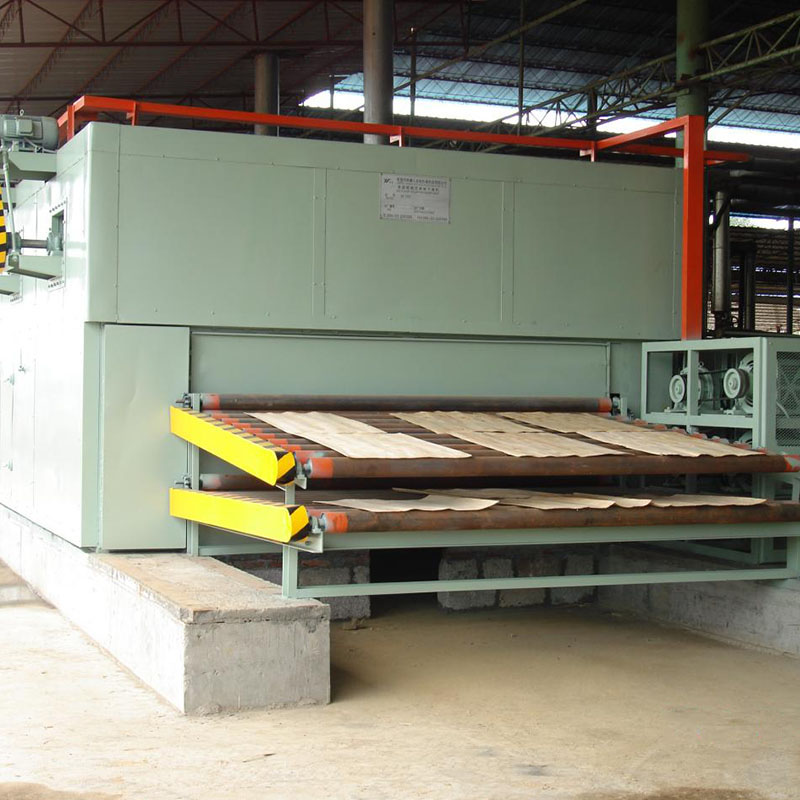
BG1332 Two-Deck Roller Veneer Dryer
BG1332 2-deck jetting roller veneer dryer is a main equipment of producing veneer. It adapt to the technologic conditions: first, cut second, dry. It is mainly with drying core board of veneers. The stringy orientation of dry veneer is the same as inputting veneer, and the width should be more than 350mm, or it will be happened phenomenon of walling up veneers. There is a ventilator in every unit dry area; it adopts straight-conveying transverse - circulating jetting way, and it lets heat put into and make humidity (wet) vent, quicken the dry pace much. Also, it makes the veneer dry be well-proportioned, reduce warp of the hydrous rate. The product has some advantages: maintain convenience, trusty safe and so on. So this is a perfect product for drying thick veneers in producing veneers process.
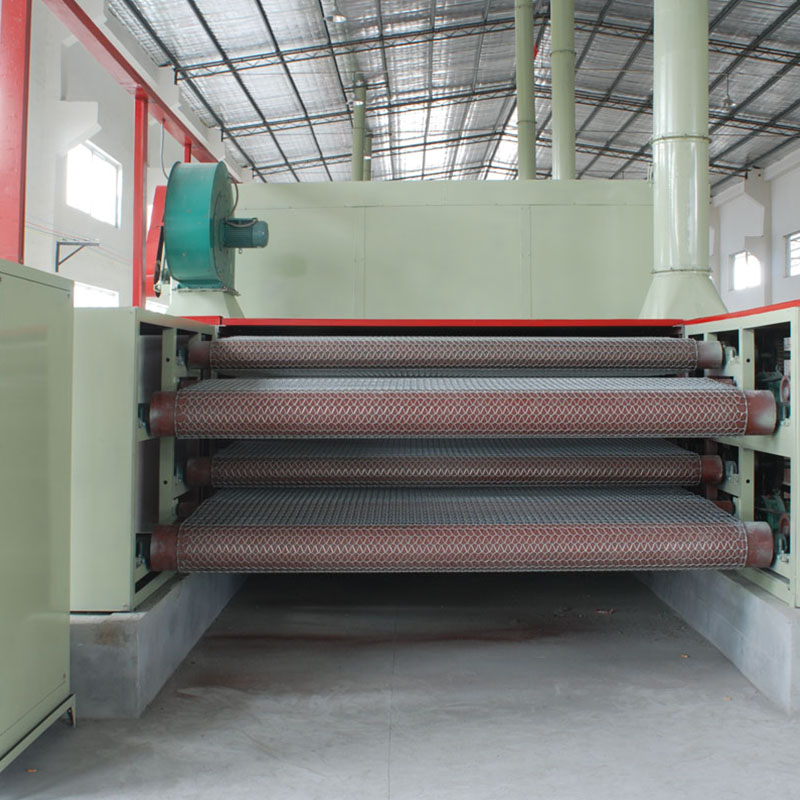
BG183 Two-Deck Mesh Belt Veneer Dryer
Our product is a kind of transverse-circulating vertical-jetting belt dryer, a kind of continuous drying equipment. Our product can be applied for the drying process of top and bottom veneer, which can be used to produce architectural moulding board, joinery board, floor board, container bottom board, and so on. eatured with less acreage and more usage, applied with the advantages of the advanced veneer dryers in and abroad, and designed for the purpose of economy, trustiness and high grade, our product guarantees a promotion of yield, an improvement of products, a cut of energy consuming and production cost, as well as satisfactory increasing benefit.
The standard type includes 13 heating sections, one cooling section (leftward) , and we can add or remove proper heating sections and adjust the heading type in order to meet your demands of production, concerning yield, arrangement and location. We'll do our best to help you obtain the most producing capability with the least investment.